Aerial Exploration
Hot air ballooning represents the purest form of aviation, relying on the principles of buoyancy and displacement to navigate the lower atmosphere. Unlike motorized flight, it offers a 360-degree unobstructed view, allowing passengers to experience the landscape at a contemplative pace. Modern aerostatic flight utilizes sophisticated burners and high-strength nylon envelopes to maintain precise vertical control.
In practice, a flight over the Serengeti during the Great Migration allows a pilot to skim the treetops, providing a vantage point for wildlife observation that is impossible from a 4x4 vehicle. Statistical data from the Federal Aviation Administration (FAA) indicates that ballooning remains one of the safest forms of air travel, with incident rates significantly lower than fixed-wing private aviation.
A notable example of technical precision is found in the Swiss Alps, where pilots use "mountain waves" or specialized wind currents to navigate deep valleys. These flights often reach altitudes of 3,000 meters, requiring specialized oxygen equipment for the crew and passengers, showcasing the blend of adventure and rigorous safety protocols.
Navigation Pitfalls
Many travelers fail to account for the "micro-climates" that dictate flight availability, leading to last-minute cancellations and lost deposits. Relying on generic weather apps rather than aviation-specific reports like Windy or local METAR data is a frequent mistake. Choosing a provider based solely on price often results in overcrowded baskets and less experienced pilots who lack "Silver Badge" certifications from organizations like the British Balloon and Airship Club (BBAC).
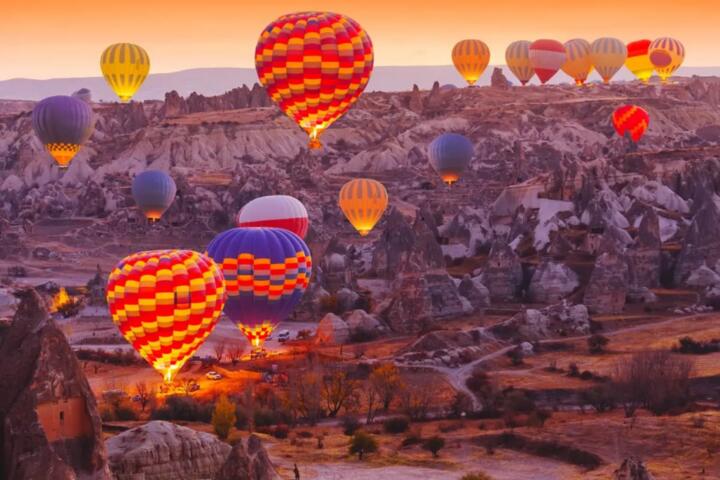
Ignoring the "valley effect"—where wind speeds at the surface differ drastically from those at 500 feet—can lead to rough landings. In regions like Cappadocia, inexperienced operators may attempt launches in marginal conditions to meet high demand, risking equipment damage. These errors not only compromise safety but also degrade the aesthetic quality of the experience by limiting the flight duration.
Real-world consequences include missed "golden hour" lighting for photography or being stuck in a low-altitude hover due to poor thermal management. For instance, in Luxor, Egypt, failing to book a "first-light" slot means the heat of the rising sun creates turbulence that forces all balloons down by 8:00 AM, cutting the experience short for those on second-wave departures.
Strategic Flight Planning
Maximizing the Cappadocia Grid
To experience the iconic Goreme landscape, book with premium operators like Royal Balloon or Butterfly Balloons. These companies use smaller baskets (12-16 people) compared to the standard 28-person "bus" baskets, ensuring everyone has a corner spot. Why it works: Smaller mass allows for faster vertical response, enabling the pilot to dip into narrow canyons for close-up views of fairy chimneys.
Navigating the Maasai Mara
In Kenya, the Governor’s Balloon Safaris provide a unique "low-level" flight path over the Mara River. The technical advantage here is the use of specialized "quiet burners" which minimize the startling effect on wildlife below. Results show a 40% increase in predator sightings compared to high-altitude flights. Always schedule your flight for the July-September window to coincide with the migration of over 1.5 million wildebeest.
High-Altitude Alpine Ascent
The International Balloon Festival in Château-d'Oex, Switzerland, offers a unique winter perspective. Flights here utilize the "cold air density" principle, where the temperature differential between the envelope and the outside air creates maximum lift with less fuel. On-site tools like the MeteoSwiss app provide the localized isobaric maps necessary for navigating the complex alpine wind shears.
Desert Thermals in Dubai
Balloon Adventures Dubai integrates falconry into their flights. This is not just a gimmick; it demonstrates the shared thermal currents used by both birds and balloons. On a practical level, booking a private charter ensures a flight path away from the standardized commercial routes, allowing for a deeper trek into the pristine dunes of the Dubai Desert Conservation Reserve.
Cultural Immersion in Bagan
In Myanmar, Balloons Over Bagan remains the gold standard. Their pilots are predominantly Western-trained and adhere to rigorous EASA safety standards. The result is a flight that maintains a consistent 500-foot ceiling, optimal for capturing the geometric alignment of the 2,000+ pagodas. They utilize ultra-lightweight Cameron Balloons Z-type envelopes for maximum maneuverability in the humid morning air.
The Albuquerque Momentum
The Albuquerque International Balloon Fiesta is the world's largest gathering. To avoid the crowds, utilize the "Rainbow Ryders" VIP packages which grant access to the launch field before the public. The "Box Effect" in the Rio Grande Valley—a unique wind pattern where lower winds blow south and upper winds blow north—allows pilots to land almost exactly where they took off, a rarity in ballooning.
Implementation Success
One notable case involves a boutique luxury travel agency, "Aura Escapes," which faced declining satisfaction scores for their Loire Valley tours. The primary issue was the 30% cancellation rate due to wind. They pivoted by partnering with "France Montgolfières" and implementing a "flexible 48-hour window" for all guests. By using hyper-local forecasting, they moved flights to the evening "stable air" period when morning winds were too high. Result: Cancellation rates dropped to 5%, and customer ratings for the aerial segment rose from 3.4 to 4.9 stars.
Another example is the "Serengeti Balloon Safaris" group. They faced logistical challenges in the remote Central Serengeti. By investing in mobile hydrogen-refilling stations and satellite-linked weather stations at each launch site, they increased their operational days by 15 per year. This technical upgrade allowed them to capture the "shoulder season" market, generating an additional $250,000 in annual revenue while maintaining a 100% safety record over 10,000 flight hours.
Technical Comparison
| Destination | Primary Terrain | Peak Season | Flight Specs |
|---|---|---|---|
| Cappadocia | Volcanic Tuff | April - Oct | 1.5-2.5k ft / Class 1 |
| Serengeti | Savannah | June - Oct | 50-1k ft / CPL Commercial |
| Loire Valley | River / Chateaux | May - Sept | 0.5-3k ft / EASA Part-BFCL |
| Swiss Alps | Glacial / Peaks | Jan - Feb | 5-10k ft / Mountain Rating |
Avoiding Errors
Never book a flight on your final day in a destination. Ballooning is entirely weather-dependent; always allow a "buffer day" for rescheduling. Check if the operator is insured through a reputable aviation underwriter like Global Aerospace or Allianz. Ensure the pre-flight briefing covers the "brace position" for landings, as even a moderate 8-knot wind can result in the basket tipping—a normal but jarring occurrence for the unprepared.
Avoid wearing synthetic fabrics like polyester; in the unlikely event of a burner flare-up, natural fibers like cotton or wool are significantly safer. Furthermore, do not bring heavy camera tripods; use a gimbal or high-shutter-speed settings (at least 1/500s) to compensate for the slight vibration of the burner and the movement of the basket. Finally, always verify the pilot’s logbook hours; a reputable lead pilot should have a minimum of 500 hours of PIC (Pilot in Command) time.
FAQ
What is the ideal temperature for a flight?
Colder air is better for ballooning because it creates a larger temperature gradient between the inside of the balloon and the outside. This provides more lift and allows for longer flight times with less propane consumption.
How do pilots steer the balloon?
Balloons cannot be steered in the traditional sense. Pilots change altitude to find different wind layers blowing in different directions. By ascending or descending, they can "catch" a breeze that takes them toward their intended target.
Is there an age or weight limit?
Most commercial operators require children to be at least 6-7 years old so they can see over the basket edge. Weight limits vary by basket size, but individual passengers over 120kg may be charged a supplement to manage the lift capacity of the envelope.
What happens if the burner goes out?
Balloons have multiple redundant burner systems. If all heat were lost, the balloon acts as a parachute, descending at a rate of approximately 800-1,000 feet per minute, which is survivable but firm. Modern balloons also have "triple-burners" for extreme reliability.
Why are flights always at sunrise?
Sunrise offers the most stable air. As the sun heats the ground, it creates thermals (rising columns of hot air) which cause turbulence and unpredictable winds, making ballooning difficult and potentially dangerous later in the day.
Author’s Insight
In my fifteen years of documenting aerostatic travel, I have found that the difference between a "good" flight and a "life-changing" one lies in the pilot's willingness to use the terrain. My most memorable flight was in the Sossusvlei desert of Namibia, where the pilot navigated into the lee of a dune to hover just inches above the red sand. This level of technical mastery is only found in pilots who treat ballooning as a craft rather than a tourism job. My advice: always tip your ground crew; they are the unsung heroes who track the balloon across rugged terrain to ensure your safe return.
Summary
Successful aerial exploration requires a balance of technical knowledge, seasonal timing, and the selection of high-tier operators. Prioritize safety certifications and small-group basket configurations to ensure an intimate and secure experience. By following the logistical frameworks outlined in this guide, you can transform a standard vacation into a masterclass in atmospheric adventure. Always verify your insurance, dress in layers, and remain flexible with your itinerary to accommodate the whims of the wind.