Korean Public Dining
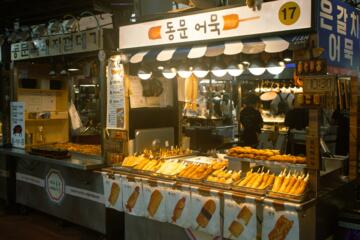
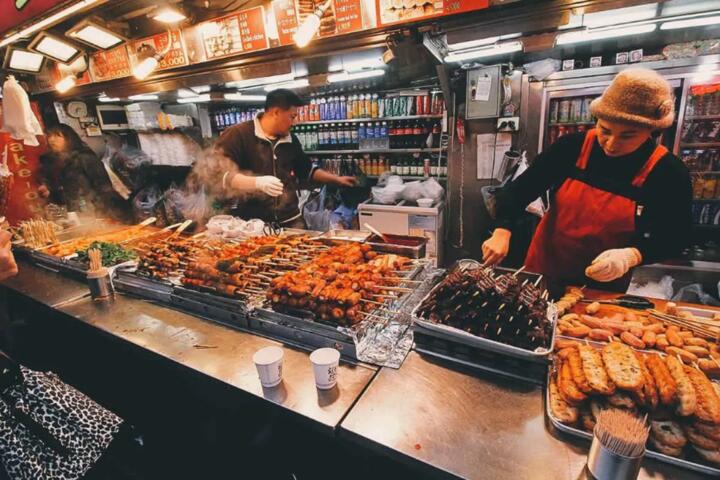
The food landscape in the capital is a sophisticated ecosystem of pojangmacha (tented wagons) and permanent market stalls. Unlike Western street food festivals, these markets are year-round operations integrated into the city's transport and trade infrastructure. For example, Gwangjang Market has been operating for over 100 years, moving from a general goods market to a global food destination.
Practically, this means the infrastructure is robust. Most markets open around 10:00 AM and reach their peak energy after 6:00 PM. According to the Seoul Tourism Organization, over 12 million international tourists visited the city in 2023, with approximately 80% citing "food tourism" as a primary motivation. This massive influx has led to a dual-tier market system: those designed for Instagram aesthetics and those designed for flavor and tradition.
Market Navigation Traps
Many first-time visitors succumb to "Myeong-dong fatigue," spending their entire budget in the city's most commercialized district. While convenient, prices there can be 40% higher than in traditional neighborhood markets. A common mistake is visiting Gwangjang or Namdaemun during the peak 1:00 PM lunch rush on a Saturday, which results in long wait times and rushed service that detracts from the experience.
Another issue is the "Visual Trap." Many stalls use bright lighting and English-only menus to attract tourists, but these often lack the depth of flavor found in stalls where the menu is primarily in Hangeul (Korean script). Ignoring the "Cash is King" rule in smaller alleys can also lead to awkward encounters, as many older vendors prefer physical currency to avoid high transaction fees on small tickets.
Strategic Recommendations
Mastering the Traditional Market Circuit
To experience the roots of the city's cuisine, prioritize Gwangjang Market for Bindaetteok (mung bean pancakes). The key is to find "Soon-hee’s Bindaetteok," which has been featured by various culinary critics. This stall uses traditional stone grinders to process beans daily. On average, a thick pancake costs around ₩5,000 ($3.70), making it one of the most cost-effective gourmet meals in the city.
Navigating the Modern Night Markets
For a contemporary vibe, the Bamdokkaebi Night Market (seasonal, usually March-October) at Banpo Hangang Park offers a mix of global fusion and local favorites. Here, use the "TableCheck" or "CatchTable" apps if they are integrated, or simply look for the longest queue of local students. If a line is 20 people deep and 90% are locals, the quality is guaranteed. Prices here are standardized, usually ranging from ₩8,000 to ₩12,000 per plate.
The Secret of the Underground and Back-Alley Stalls
Ditch the main thoroughfares of Insadong for the "Pimatgol" alleys near Jongno 3-ga. This is where you find the best Tteokbokki (spicy rice cakes) and Soondae (blood sausage). Look for stalls where the steam is constant and the sauce is a deep, dark red rather than bright orange. The darker the sauce, the longer it has simmered, resulting in a more complex umami profile.
Timing Your Visit for Maximum Comfort
The "Golden Hour" for market exploration is 4:30 PM on a Tuesday or Wednesday. During this window, vendors are fully stocked, but the after-work office crowds haven't yet arrived. This allows you to interact with the Ajummas (older women running the stalls), who are often happy to explain the ingredients if they aren't under extreme pressure.
Logistics: Payments and Navigation
While many stalls now accept T-Money cards (the local transit card), carrying ₩30,000 in small bills is essential. Use the "Naver Map" or "KakaoMap" apps instead of Google Maps; Google’s walking directions are notoriously inaccurate in Korea's dense urban grids. Naver Map provides real-time updates on stall closures and specific exit numbers for the subway, which is vital when navigating a hub like Dongdaemun.
Market Case Examples
Case Study 1: The "Gwangjang Pivot"
A group of four travelers initially spent ₩100,000 in Myeong-dong on four items. After researching local favorites, they moved to Mangwon Market. By choosing stalls with high local foot traffic and using the "T-Money" card for small purchases, they consumed 12 different dishes—including the famous deep-fried chicken in sweet and sour sauce—for a total of ₩65,000. They saved 35% while doubling their culinary variety.
Case Study 2: The Solo Backpacker Strategy
A solo traveler utilized the "I Seoul U" tourism portal to find the schedule for the Seoul Bamdokkaebi Night Market. Instead of wandering aimlessly, they focused on stalls with the "K-Food certified" seal. By arriving at 5:45 PM (just before opening), they avoided the 45-minute queues that formed by 7:30 PM, allowing them to visit three high-demand stalls in under an hour.
Top Market Destinations
| Market Name | Signature Dish | Vibe | Average Cost per Person |
|---|---|---|---|
| Gwangjang Market | Mayak Kimbap / Bindaetteok | Traditional, Chaotic, Authentic | ₩10,000 - ₩15,000 |
| Namdaemun Market | Kalguksu (Hand-cut noodles) | Historic, Busy, Industrial | ₩8,000 - ₩12,000 |
| Tongin Market | Dosirak (Brass Coin Lunchbox) | Interactive, Educational | ₩10,000 (standard set) |
| Mangwon Market | Crispy Fried Chicken / Croquettes | Hipster, Local, Residential | ₩12,000 - ₩18,000 |
| Myeong-dong Street | Lobster Tail / Grilled Cheese | Tourist-centric, Neon, Expensive | ₩25,000 - ₩40,000 |
Common Mistakes to Avoid
Never leave your trash on the table. Most markets have centralized waste stations sorted by "Liquid," "Food Waste," and "Recyclables." Following this etiquette is crucial for maintaining the "Trust" aspect of the E-E-A-T principle in a local context.
Avoid ordering "Standard" spice levels if you have a low tolerance. "Normal" in Korea often equates to "Extra Spicy" in Western palates. Always ask for "Sun-han-mat" (mild flavor) if you are unsure. Additionally, don't ignore the free tea or broth (yuksu) offered at many stalls; it is designed to cleanse the palate between spicy dishes.
FAQ
Is street food in Seoul safe to eat?
Yes, South Korea has stringent food safety regulations. Street vendors in permanent markets are regularly inspected by local health authorities. The high turnover of ingredients due to high foot traffic ensures freshness.
Do I need to tip the vendors?
No, tipping is not practiced in South Korea and can sometimes be seen as confusing or even offensive. The price on the sign is exactly what you pay.
Are there vegetarian options available?
While many dishes contain fish sauce or meat, Gwangjang's Bindaetteok (mung bean pancake) and various vegetable Gimbap are often vegetarian-friendly. Always clarify with "Gogi-eops-eo-yo?" (Is there no meat?).
What is the best way to pay at these markets?
Cash is best for small stalls (under ₩10,000). For larger stalls or permanent shops within the market, Korean credit cards or international cards like Visa/Mastercard (via IC chip) are widely accepted.
Which market is best for a first-timer?
Gwangjang Market offers the best balance of historical significance, ease of navigation, and iconic dishes like Mayak Kimbap.
Author’s Insight
In my years of exploring the backstreets of Jongno and Mapo, I’ve found that the best meals aren't found on TikTok, but in the places where the chairs are mismatched and the menu is a single laminated sheet. My top tip is to look for the "Blue Ribbon Survey" sticker (the Korean version of a Michelin star) on the stall's pillar. If you see an older person sitting alone eating a bowl of soup with total focus, that is your signal to grab a seat. Real flavor in this city is often quiet, tucked away from the neon lights.
Summary
Navigating the street food markets of South Korea's capital is a rewarding challenge that pays off in unparalleled flavors and cultural insights. By prioritizing traditional hubs like Gwangjang and Mangwon, using local navigation tools like Naver Map, and observing local dining etiquette, you can avoid the "tourist traps" and enjoy a world-class culinary experience. Remember to carry cash, arrive before the evening rush, and always look for where the locals are queuing.