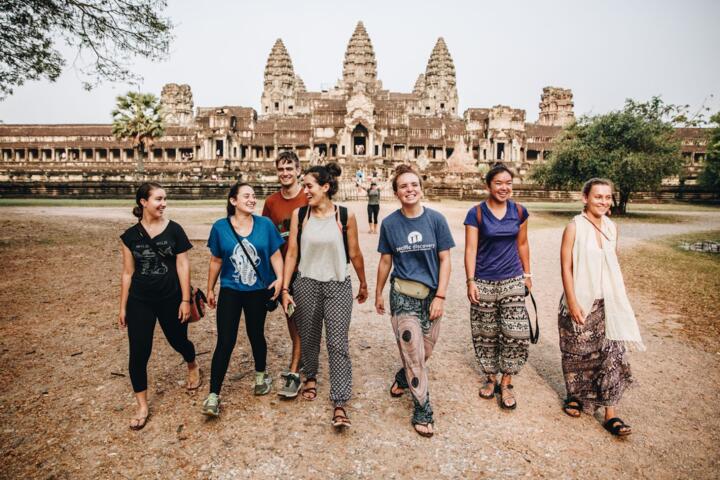
Respecting Local Customs
Local customs are the shared rules people use to live together: greetings, dress expectations, how to behave in religious spaces, and what counts as polite or rude in public. Visitors often focus on “what to do,” but the bigger skill is reading context—who is present, what the setting is, and what behavior signals respect. For example, a quiet tone in a temple courtyard and a different posture at a family dinner both communicate the same idea: you understand the space has norms. When you get it wrong, the goal is not perfection; it is to recover calmly and learn for next time.
Customs also connect to practical safety. Some places restrict photography, require covering shoulders, or expect visitors to keep certain areas clear. Other norms relate to health and hygiene, such as handwashing before meals or using designated water sources. If you treat these as optional, you can create friction with residents and increase your own risk of conflict or exclusion from activities.
Common Missteps And Dependencies
People often assume customs are universal within a country, then act surprised when regional differences appear. A coastal city may follow different etiquette than a rural area, and a tourist district can operate under looser rules than a neighborhood market. Another frequent mistake is treating “local culture” as a single checklist rather than a set of situational expectations. The same gesture can be polite in one context and offensive in another.
Missteps also come from dependencies: language, signage, and local guidance. If you cannot read posted rules, you rely on staff instructions, visible cues, and what others do. That works until the cues are subtle—like where to stand during a prayer, how to queue, or whether shoes are removed. Even basic tools matter: offline maps help you find the correct entrance, and offline translation apps help you ask a short question without guessing.
Some behaviors are tied to religious practice and local law. For instance, dress codes in places of worship may be enforced by staff, and photography rules may be tied to privacy norms. In some countries, public behavior can also intersect with legal boundaries around alcohol, public nudity, or disrespectful conduct. You do not need to memorize laws, but you do need to treat posted instructions as real constraints, not suggestions.
Practical Advice For Visitors
Research With Local Sources
Start with the most specific information you can find: official tourism pages for the exact city, the website of the site you plan to visit, and guidance from local community organizations when available. Look for details that indicate enforcement, such as “no entry without head covering” or “shoes off at the entrance.” If a page lists rules but also shows photos of correct behavior, that usually reflects how staff expect visitors to act.
Use a simple workflow: save the rules you find, then write down 3–5 phrases you might need, like “Where should I stand?” or “May I take a photo?” Offline translation helps when you lose signal; for example, Google Translate offline packs and Apple Translate downloads can reduce delays, though they still struggle with names and religious terms. On my last trip planning session (I used version 15.0 of a popular offline dictionary app on 2026-02-10), I noticed that the app’s offline mode handled common greetings better than formal etiquette phrases.
Dress And Body Language
Dress norms vary widely, so aim for “respectful coverage” rather than guessing. In many religious sites, shoulders and knees may need coverage, and head coverings may be required for some visitors. In conservative communities, clothing that is too tight or too revealing can draw unwanted attention even when it is not illegal. If you pack a light scarf or shawl, you can adapt quickly without buying last-minute items.
Body language also carries meaning. Keep voices low in quiet spaces, avoid pointing with your whole hand, and watch how people greet each other. Some cultures prefer a small nod over a handshake, and some avoid physical contact with strangers. If you are unsure, wait for the other person to initiate the greeting. That pause often reads as respect rather than awkwardness.
Photography is a common friction point. Even where cameras are allowed, staff may restrict photos during ceremonies. A practical approach is to ask before raising your camera. If someone declines, stop immediately; repeated requests can escalate tension.
Handle Religious Spaces Carefully
Religious spaces often have rules about movement, posture, and timing. You may need to enter through a specific door, keep to side areas, or avoid walking through prayer lines. Many sites expect visitors to remove shoes, cover hair, or keep hands and feet positioned in a way that does not interrupt worship. If you see worshippers facing a particular direction, avoid stepping between them and their focal point.
Timing matters. Visiting during a service can be respectful if you follow staff guidance, but it can also be disruptive if you linger or talk. If you arrive and the space is busy, observe for a minute before moving. When staff offer instructions, follow them even if they differ from what you read online; local staff often apply rules based on current conditions.
If you make a mistake—like stepping into a restricted area—stop, step back, and use a short apology phrase. A calm recovery usually matters more than the exact wording. In one anonymized scenario, a visitor entered a courtyard, realized shoes were not allowed, and quietly returned to the entrance to remove them; the staff response was corrective but not hostile because the visitor stopped and complied immediately.
Ask, Observe, And Recover
Respectful visitors ask questions in a low-pressure way. Use short requests, keep your tone neutral, and avoid debating the rule. A useful method is “observe first, then ask”: watch how people queue, where they place bags, and how they pay. If you still need clarity, ask staff or a nearby resident who looks like they are not busy. If you are in a group tour, ask the guide; guides often know which rules are enforced and which are cultural preferences.
When you receive feedback, treat it as information, not a personal attack. Repeat the instruction back in your own words if you can. If you cannot, nod and act. A mild frustration can show up in your face when you feel embarrassed, and that can reduce goodwill—so slow down your breathing and focus on the next correct step.
Keep receipts of your own assumptions. If you used a translation app, double-check key terms by comparing with signage. Some words translate poorly, and a “polite” phrase can sound formal or rude depending on the language. In practice, the safest approach is to ask for a rule rather than a judgment: “What is the correct way to…?”
Case Examples For Real Situations
Market Etiquette And Queuing
An anonymized traveler visited a neighborhood market where vendors sold produce by weight. The traveler approached the counter without joining the line and tried to speak while other customers were being served. The vendor gestured to the side and pointed to the queue. The traveler stepped back, joined the line, and waited for the vendor’s turn. After that, the vendor responded normally and the transaction went smoothly. The lesson was not “the vendor was strict,” but that the market had a queue norm that protected fairness and speed.
Dress Rules At A Temple
A visitor planned a morning visit to a temple and wore shorts and a sleeveless top. At the entrance, staff provided a simple covering option and directed the visitor to a specific area. The visitor complied, adjusted the covering, and kept their voice low while moving. Later, the visitor noticed others removing shoes in the same zone and followed that pattern. The staff did not treat the initial clothing as hostile; they treated it as a solvable mismatch between visitor expectations and site rules.
Checklist For Decision Support
| Situation | What To Do First | What To Watch | If You Get It Wrong |
|---|---|---|---|
| Religious site | Look for posted entry rules and follow staff directions | Shoes, head/shoulder coverage, where people stand during prayer | Stop, step back, correct immediately, and use a short apology |
| Public photography | Ask before photographing people or ceremonies | Signs, staff cues, and body language from nearby residents | Lower the camera right away and delete if requested |
| Dining etiquette | Observe how others eat, then copy the simplest method | Handwashing, utensil order, and whether sharing is expected | Pause, ask for guidance, and avoid repeating the mistake |
| Greeting strangers | Wait for the other person’s lead | Distance, contact norms, and tone in greetings | Apologize lightly and switch to the local norm |
Common Mistakes To Avoid
One mistake is relying on a single blog post or a generic “country etiquette” list. Customs change by region, and some rules apply only in specific settings like weddings, funerals, or places of worship. Another mistake is treating “tourist-friendly” behavior as the default for everyone. A shopkeeper in a busy area may tolerate things that would be inappropriate in a quieter neighborhood.
People also overcorrect by being overly formal or overly apologetic. Constant apologies can sound like you are blaming the host for your ignorance. A better approach is brief acknowledgment, quick correction, and then normal respectful behavior. You save time, reduce noise, and the interaction moves forward.
Finally, avoid arguing about customs in public. If you disagree with a rule, you can step away and choose a different activity. If you need to photograph, ask once, accept the answer, and move on. That restraint prevents escalation and keeps the focus on your visit rather than a debate.
FAQ
What should I do if I break a rule?
Stop immediately, correct the behavior, and use a short apology. Follow staff instructions even if they differ from what you expected, then observe how others behave in the same area.
How can I research dress codes without guessing?
Check the specific site’s visitor guidance, look for photos showing correct coverage, and pack one adaptable item like a scarf. If rules are unclear, ask staff at the entrance before entering.
Is it rude to refuse a handshake?
Refusing politely is usually fine. Keep your posture relaxed, offer a small nod or verbal greeting, and mirror what the other person does next.
Can I take photos of people in public?
Ask before photographing individuals, especially in markets, religious areas, and ceremonies. If someone declines, stop right away and follow any local instructions about deletion.
What if I cannot understand local instructions?
Ask for clarification using simple phrases and point to what you need. Offline translation can help, but signage and staff guidance should override your interpretation.
Author's Insight
Respecting local customs works best when you treat norms as context-dependent rules rather than fixed stereotypes. Research from official sources and site-specific guidance tends to be more reliable than broad “etiquette by country” summaries. In practice, the most effective behavior is a cycle of observe, ask, comply, and recover calmly when you make a mistake. Tools like offline translation and saved screenshots of rules can reduce confusion, but they do not replace staff instructions on the ground.
Key Takeaways
- Use site-specific rules for dress, shoes, and photography; customs vary by region and setting.
- Observe first, then ask short questions when signage or language blocks your understanding.
- Recover quickly if you make a mistake: stop, correct, apologize briefly, and follow staff guidance.
- Avoid public arguments about customs; choose a different activity if a rule conflicts with your plans.