Global Pizza Perception
For decades, the Associazione Verace Pizza Napoletana (AVPN) has set the gold standard, leading many to believe that "authentic" pizza must have a soft, blistered crust and a 60-90 second cook time. However, Italy’s culinary map is far more fragmented. From the scrocchiarella of Rome to the fried montanara of the south, the diversity is driven by local wheat varieties and historical oven technologies.
In practice, a Roman Pizza Tonda requires a lower hydration (around 55%) and the addition of oil to achieve its signature crackle, whereas a Neapolitan dough avoids oil entirely. Recent data from CNA Alimentare suggests that while Neapolitan style remains popular, "Pizza in Teglia" (tray pizza) has seen a 15% increase in market share across European artisanal bakeries due to its longer shelf life and crunchier texture.
Statistically, the average Italian consumes about 7.6 kilograms of pizza per year, but the specific type varies wildly by latitude. In Turin, you are more likely to find Pizza al Padellino, baked in small, high-sided pans, reflecting a historical preference for softer, bread-like textures over the charred edges found in Campania.
Geographic Errors
The biggest mistake travelers and amateur chefs make is applying "Neapolitan rules" to every Italian pie. Using San Marzano tomatoes on a Roman pizza, for example, can lead to a soggy center because the Roman base is too thin to support the high moisture content of those specific plum tomatoes. This lack of regional specificity results in a muddled flavor profile that respects neither tradition.
Commercial "Italian-style" chains often fail by using a universal dough recipe for different toppings. Authenticity requires matching the flour’s W-index (strength) to the specific regional style. Using a high-strength flour (W300+) meant for long Neapolitan fermentation on a short-rise Pizza Siciliana will result in a tough, rubbery crust that is difficult to digest.
The consequences of these errors are visible in the rise of "tourist traps" in cities like Florence or Venice, where generic frozen bases are marketed as authentic. For the professional, failing to distinguish between Pizza alla Pala and Pizza in Teglia can alienate a discerning clientele that expects specific crumb structures and hydration levels (often exceeding 80% for the former).
The Roman Crunch: Pizza Tonda and Scrocchiarella
Unlike its soft southern cousin, the Roman round pizza is rolled out with a pin or stretched very thin to ensure there is no "cornicione" (rim). It is baked at lower temperatures (around 300°C to 350°C) for a longer duration. This extracts moisture, creating a biscuit-like snap. Key ingredients often include Pecorino Romano and black pepper, rather than just mozzarella.
Pizza in Teglia alla Romana: High Hydration Mastery
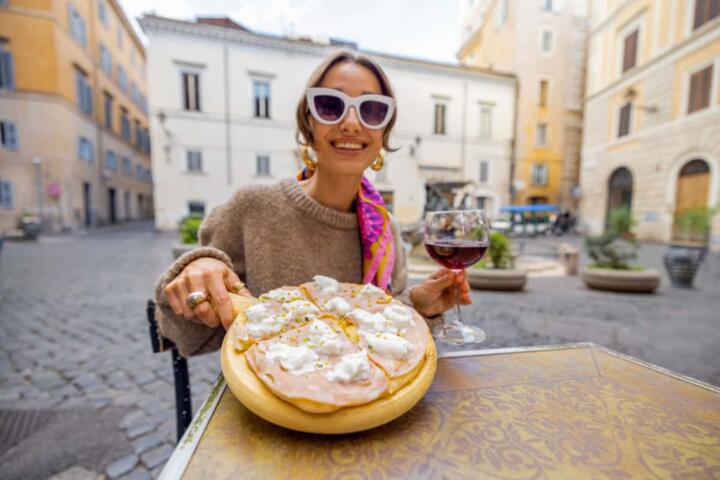
This is the rectangular pizza sold by weight (al taglio). It is characterized by an incredibly airy, honeycomb interior achieved through 80-90% hydration. It requires a long cold fermentation (48-72 hours) in a professional refrigerator like those from Irinox. The result is a light, digestible base that supports heavy gourmet toppings like mortadella and pistachio cream.
Sicily’s Thick Heritage: Sfincione and Scacciata
In Palermo, pizza looks more like focaccia. Sfincione features a spongy base topped with a rich tomato sauce, onions, anchovies, and Caciocavallo cheese. It is rarely round and never thin. In Catania, you find Scacciata, which is more of a stuffed pie, showcasing how regional pizza often bleeds into the territory of savory pastries.
The Fried Soul of Naples: Pizza Fritta and Montanara
Before the oven became the center of the home, frying was the standard. Pizza Fritta is a sealed pocket of dough filled with ricotta, cicoli (pork fat), and pepper. The Montanara is flash-fried then topped with sauce and finished in the oven. Brands like Olitalia provide the high-smoke-point oils necessary to ensure these aren't greasy but crisp.
Turin’s Pan Secret: Pizza al Padellino
Specific to the Piedmont region, this pizza is proofed and baked inside a small, oiled silver or aluminum pan. The oil essentially "fries" the bottom of the dough while it bakes, creating a golden, crunchy crust and a very soft top. It is the perfect bridge between a focaccia and a traditional pizza, often served in historic cafes using Mulino Caputo Blue flour.
Puglia’s Panzerotti and Barese Style
In Bari, the pizza is even thinner than in Rome, often called "skinny pizza." However, the region is more famous for Panzerotti—small half-moons of dough filled with fresh tomato and mozzarella, then deep-fried. The use of local extra virgin olive oil from the Coratina olive variety gives these snacks a distinct, peppery finish.
Practical Application
To replicate these styles, you must start with the flour. For high-hydration Roman styles, look for flour blends that include a percentage of soy or rice flour, which aids in crispiness. Using a tool like the Ooni Karu 16 or a Brezza electric oven allows for the temperature control necessary to switch between the 450°C needed for Naples and the 320°C needed for Rome.
For the Roman Pizza in Teglia, the "stretch and fold" technique is non-negotiable. Instead of kneading, you fold the dough over itself every 30 minutes to build a gluten window without degassing the air bubbles. This is what creates the "alveoli" (holes) seen in high-end Italian bakeries. Use a blue steel pan (teglia in ferro blu) seasoned with oil to ensure the bottom caramelizes perfectly.
When sourcing toppings, move beyond "generic mozzarella." Use Fiordilatte for high-heat ovens because it has less water than Mozzarella di Bufala, preventing the "soup effect" in the middle of your pie. For Sicilian styles, seek out Tomagno or Ragusano cheeses to provide the authentic salty kick that defines the island's palate.
Market Case Studies
Bonci Pizzarium (Rome): Gabriele Bonci revolutionized the "pizza al taglio" model by treated the dough as a long-fermented sourdough bread. By using heirloom grains and 80% hydration, he turned a "fast food" into a gourmet experience. Result: A single shop became a global benchmark, leading to international expansions and a 400% increase in brand value over a decade.
L'Antica Pizzeria da Michele (Global Expansion): While strictly Neapolitan, their expansion strategy shows the power of regional branding. By maintaining a limited menu (only Marinara and Margherita), they reinforced the "purity" of the style. This focus allowed them to scale to over 30 global locations while maintaining a 4.5-star average on platforms like TripAdvisor and Yelp.
Pizza Architectures
| Style | Hydration % | Oven Temp | Fat in Dough | Texture Profile |
|---|---|---|---|---|
| Neapolitan | 60-70% | 430-480°C | None | Soft, elastic, charred |
| Roman Tonda | 55-60% | 300-350°C | Olive Oil | Thin, ultra-crispy |
| Roman Teglia | 80-90% | 250-280°C | Olive Oil | Airy, crunchy bottom |
| Sicilian (Sfincione) | 70% | 220-250°C | Lard/Oil | Spongy, bread-like |
| Turin Padellino | 65% | 300°C | Oil (in pan) | Soft crumb, fried base |
Common Execution Errors
One frequent mistake is using a rolling pin on Neapolitan dough. This pushes the carbon dioxide to the edges and destroys the structure. Conversely, not using a rolling pin for Roman Scrocchiarella is also an error; the pin is necessary to achieve that specific, uniform thinness that hand-stretching cannot replicate.
Another error is the "over-topping" of Roman pizza. Because the base is so thin, adding more than three ingredients usually results in a structural failure where the slice flops. For a Roman base, less is more. Stick to high-quality fats like Guanciale from Salumi Pasini which renders out and crisps the dough further during the bake.
FAQ
What is the main difference between Pizza Romana and Pizza Napoletana?
The main difference is texture and ingredients. Neapolitan is soft and chewy with no fat in the dough, baked quickly at high heat. Roman is thin and crunchy, often containing olive oil, and baked longer at lower heat.
Which Italian pizza style is the healthiest?
The Roman Pizza in Teglia or Pala is often considered more digestible because of its 48-72 hour fermentation process, which allows enzymes to break down complex starches before you eat it.
Do Italians really put pineapple on pizza in any region?
Traditionally, no. While a few "experimental" chefs in Milan or Rome might offer it as a provocation, it is not part of any regional heritage. Authentic regional toppings focus on local produce like broccoli rabe (Puglia) or pistachios (Sicily).
What flour should I use for a crunchy Italian crust?
For a crunchy crust (Roman style), use a "Tipo 0" flour with medium strength or a specific "Pizza Croccante" blend. Adding 10% semolina flour can also enhance the crunch.
Why is Sicilian pizza rectangular?
The rectangular shape comes from the use of baking trays (teglie) in home kitchens and communal ovens, making it easier to feed large families and transport the bread-like slices.
Author’s Insight
In my years spent traveling from the grain fields of Puglia to the pizzerias of Verona, I’ve learned that the "best" pizza is entirely contextual. If you want a quick, light lunch, a slice of Roman Pizza alla Pala is unbeatable. If you want a traditional sit-down dinner, the Neapolitan experience is iconic. My biggest piece of advice: don't get hung up on "rules" created by marketing boards. Focus on fermentation and hydration—those are the two variables that define the soul of any regional style.
Summary
Understanding the regional styles of Italian pizza reveals a world far more complex than just tomato and mozzarella. Whether it is the high-hydration mastery of Rome or the fried traditions of Naples, each style offers a unique technical challenge and a distinct sensory reward. To truly appreciate this craft, one must experiment with different flour strengths, hydration levels, and baking temperatures. Start by mastering one specific regional style—like the Roman Teglia—and you will quickly see why Italy’s pizza heritage is a diverse map of flavors rather than a single destination.