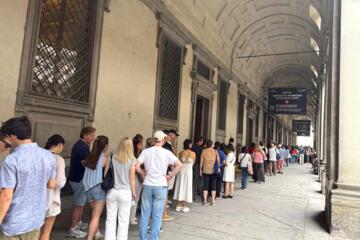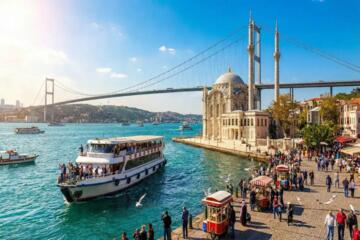
It usually happens at the worst possible moment.
You've crossed oceans, navigated airport delays, survived questionable hotel coffee, and finally arrived at the attraction that has occupied your Pinterest boards, travel spreadsheets, and daydreams for months.
Then you see it.
A locked gate.
A handwritten sign.
Scaffolding.
Or perhaps the modern traveler's equivalent of a horror movie jump scare: "Temporarily Closed."
For a brief moment, the disappointment lands with surprising force. It feels irrational, yet deeply personal. After all, travel is built on anticipation. We mentally rehearse these experiences long before they happen. When a major attraction suddenly becomes inaccessible, it can feel as though someone has torn several pages from the story you've been writing in your head.
But here's a secret seasoned travelers learn sooner or later:
The best trips rarely unfold according to plan.
In fact, some of the most memorable travel experiences begin precisely when Plan A collapses in spectacular fashion.
First, Don't Panic—or Rage-Post
The modern traveler possesses a remarkable superpower: the ability to leave a one-star review within thirty seconds of experiencing mild inconvenience.
Resist the urge.
Attractions close for countless reasons. Restoration projects preserve historic landmarks for future generations. Weather conditions protect visitors from dangerous situations. Cultural sites may close unexpectedly for religious ceremonies, national holidays, or conservation efforts.
Even the most iconic destinations occasionally need a timeout.
That centuries-old cathedral isn't personally attacking your vacation. The museum didn't organize renovations specifically around your arrival date. And contrary to what your frustration may suggest, the universe has not singled you out for punishment.
Take a breath. Gather information. Then pivot.
Is It Truly Closed?
Not all closures are created equal.
Many travelers see a barrier and immediately assume defeat when, in reality, only part of the attraction is inaccessible.
A castle might have one wing under restoration while the grounds remain open. A museum could be rotating exhibits but still offer access to permanent collections. A famous viewpoint may have an alternative observation area nearby.
Before abandoning ship, check official websites, visitor centers, staff announcements, or local tourism offices.
Travel has become increasingly complicated in the post-pandemic era, and operating schedules can change faster than airline baggage policies.
A little investigation may salvage far more of the experience than you initially expect.
Look Beyond the Headliner
One of travel's greatest traps is what psychologists might call destination tunnel vision.
You become so focused on one landmark that everything around it fades into the background.
Consider the traveler who flies to Paris for the Eiffel Tower, only to discover maintenance closures. Disappointing? Certainly.
But Paris remains Paris.
The cafés are still humming. The bakeries still perfume entire streets with butter and sugar. The river still glides beneath stone bridges that have witnessed centuries of history.
The attraction may have been your reason for coming.
It doesn't have to be your only reason for staying.
Often, the neighborhood surrounding a major attraction reveals more about a destination than the attraction itself.
Ask Locals the Question
Every traveler should keep one question ready at all times:
"If this place is closed, where would you go instead?"
It's astonishing how often this simple inquiry unlocks experiences guidebooks barely mention.
Locals possess a different mental map of their city. They know which overlooked museum rivals the famous one. They know which hill offers a better sunset than the crowded viewpoint everyone photographs.
They know which family-run restaurant serves food that makes heavily marketed tourist spots seem like airport vending machines.
The answer may lead somewhere completely unexpected.
That's usually a good sign.
Embrace Wandering
Travel itineraries have become increasingly militarized.
Color-coded spreadsheets. Reservation confirmations. Timed entry slots. GPS routes optimized to the minute.
Sometimes a closure does something wonderfully rebellious.
It creates empty space.
And empty space is where discovery lives.
Without a strict destination demanding your attention, you begin noticing details that normally disappear into the background. An alleyway filled with murals. A bookstore hidden beneath an apartment building. A market stall selling pastries you've never seen before.
Many travelers spend thousands of dollars crossing continents only to rush past the very moments that make places memorable.
An unexpected closure can force you to slow down enough to notice them.
Have a Backup Strategy
The most experienced travelers approach every destination with a mental bench of substitutes.
Think like a football manager whose star player just pulled a hamstring during warmups.
You don't cancel the match.
You make a substitution.
Before arriving in any city, identify two or three secondary attractions that genuinely interest you. Not emergency filler. Real alternatives.
If your primary plan falls apart, you're already equipped with options.
This approach transforms disappointment into a simple logistical adjustment rather than a vacation crisis.
Return at a Different Time
Sometimes the attraction isn't fully closed.
It's merely closed right now.
Many famous sites shut down on specific weekdays, operate reduced seasonal hours, or close briefly between tours.
A little flexibility can often rescue the situation.
Perhaps the museum opens tomorrow. Maybe the historic site reopens after a private event. Perhaps severe weather will clear by evening.
The difference between missing an experience entirely and enjoying it later often comes down to a few hours of patience.
Story Improves When Things Fail
Years from now, you probably won't remember every attraction that opened exactly when expected.
You'll remember the unexpected detours.
The hidden café discovered after your original plans collapsed.
The local festival you stumbled into because a museum happened to be closed.
The neighborhood you never intended to visit but ended up loving more than the attraction itself.
Travel stories need friction. They need surprises. They need moments when reality ignores the itinerary and writes its own chapter.
A closed attraction may feel like a setback in the moment.
More often than not, it's simply the beginning of a better story.
Final Thoughts
Every traveler eventually encounters a locked gate, a closure notice, or a carefully planned experience that never materializes.
The difference between a ruined day and a remarkable one rarely depends on the closure itself.
It depends on what happens next.
The most rewarding trips aren't built on flawless execution. They're built on curiosity, flexibility, and the willingness to follow unexpected paths.
Because sometimes the destination you planned to visit is closed.
And sometimes that's exactly how you discover the place you were meant to find.