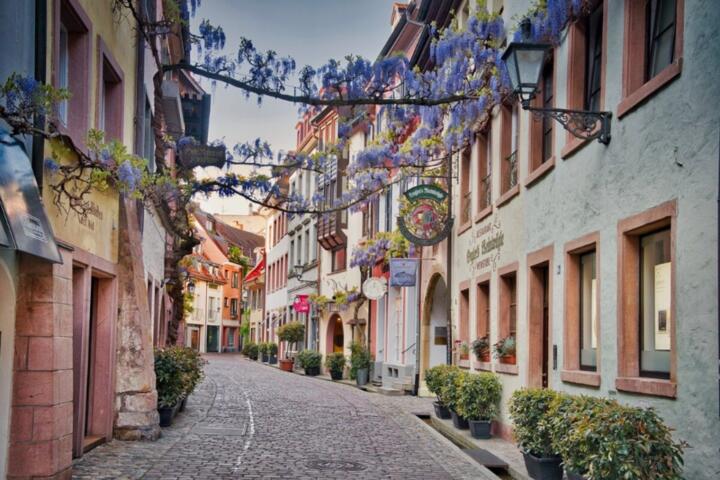
Shift Toward Destinations
The European Travel Commission (ETC) reported a significant trend in 2024: "undertourism" is becoming a luxury. While 75% of visitors flock to just 20% of the continent's landmass, savvy travelers are pivoting toward secondary cities and remote regions. This shift isn't just about avoiding lines; it’s about economic efficiency. For example, a three-course meal in Tirana, Albania, costs roughly $15, compared to $65 in Paris, representing a 330% difference in purchasing power.
Practically, this means choosing the Julian Alps over the Swiss Alps or the Alentejo coast over the Algarve. Data from 2025 indicates that search interest for "hidden gems" has increased by 42% year-over-year, as remote work flexibility allows travelers to stay longer in less-connected areas. The goal is to find regions where the local infrastructure is modern enough for comfort but hasn't yet been commoditized for the masses.
Failing Itineraries
Most travelers rely on outdated "Top 10" lists from 2018, leading them straight into the heart of "tourist traps" where prices are inflated and quality is diluted. The primary mistake is equating popularity with value. When a destination reaches a certain saturation point, the local culture often retreats, replaced by international chains and souvenir shops that lack authenticity.
This "Disneyfication" of European cities results in a loss of the very charm people travel to see. In Hallstatt, Austria, for instance, the local population of 780 is often outnumbered by 10,000 daily visitors, leading to restrictive measures and a hostile environment. Real-world consequences include "travel fatigue," where the stress of navigating crowds outweighs the joy of discovery, and a significant drain on the travel budget for mediocre services.
Top 10 Hidden Gems
1. Gjirokastër, Albania: The Stone City
Albania is currently seeing a 25% annual growth in tourism, but Gjirokastër remains a preserved Ottoman masterpiece. Use Skyscanner to fly into Tirana and rent a car through Localrent for the best rates. Stay in a traditional "Kula" house to experience the unique architecture first-hand. This works because the Balkan infrastructure is rapidly improving, but prices remain 60% lower than in neighboring Greece.
2. The Azores, Portugal: The Atlantic’s Secret Garden
Often called the "Hawaii of Europe," this archipelago is 1,500 km off the coast. Use SATA Azores Airlines for inter-island hops. Focus on São Jorge for its "fajãs" (coastal plains). Unlike the mainland, the Azores limit hotel beds to prevent overdevelopment. Booking via Booking.com for "Agroturismo" properties ensures your money stays within the local farming community.
3. Tartu, Estonia: The Intellectual Heart
While Tallinn is crowded with cruise shippers, Tartu—the 2024 European Capital of Culture—offers a sophisticated, youthful vibe. It is 30% cheaper than Helsinki. Utilize the Lux Express bus for a seamless 2-hour journey from the capital. The city's "Soup Town" district provides a rare look at 19th-century wooden architecture that escaped the wars.
4. Svaneti, Georgia: Europe’s Highest Inhabited Region
Mestia and Ushguli offer medieval watchtowers and 5,000-meter peaks. This is for the "slow traveler." Using Gotrip.ge allows you to hire a private driver for a fixed price, avoiding the unreliable "marshrutkas." The result is access to glaciers and UNESCO sites with virtually zero queue times, a rarity in high-altitude trekking.
5. Olomouc, Czech Republic: The Prague Alternative
Olomouc houses the second-largest historical preservation area in the country after Prague but receives only a fraction of the visitors. The Holy Trinity Column is a Baroque marvel with no selfie-sticks in sight. Use RegioJet for premium train travel at budget prices. In 2025, a pint of local craft beer here still costs under $2.50.
6. The Pelion Peninsula, Greece: Where Mountains Meet the Sea
Skip Santorini for the lush forests and hidden coves of Pelion. This is where locals holiday. Renting a villa through Airbnb in villages like Tsagarada provides access to the "Mamma Mia" aesthetic without the "Mamma Mia" price tag. Statistics show that Pelion's dining costs are 40% lower than the Cyclades.
7. Wrocław, Poland: The City of 100 Bridges
Wrocław is a hub of Gothic and Renaissance architecture. Search for the 600+ bronze gnomes hidden around the city—a playful nod to the Orange Alternative movement. Use the Jakdojade app for perfect local transit navigation. The city’s "Milk Bars" (Bar Mleczny) offer 1950s-era pricing for high-quality, authentic Polish pierogi.
8. Trebinje, Bosnia and Herzegovina: Mediterranean Charm
Located just 30km from Dubrovnik, Trebinje offers the same limestone beauty and wine culture for a quarter of the price. Visit the Tvrdoš Monastery for wine tasting. Cross-border travel is easy with a Discover Cars rental that includes a Green Card. It works because it leverages the beauty of the Adriatic hinterland without the coastal tax.
9. Senja, Norway: The Dramatic North
While Lofoten is trending on Instagram, Senja offers the same jagged peaks and fjords without the campervan traffic jams. Use the Entur app to plan northern routes. Visit in September for a high probability of seeing the Aurora Borealis with zero light pollution and no crowds. It’s the ultimate "quiet luxury" destination.
Real-World Comparison
Case Study 1: The "Alps" Swap
A family of four planned a 7-day ski trip to Val d'Isère, France. Estimated cost: $8,400. After consulting travel data, they pivoted to Bansko, Bulgaria. They stayed in a 5-star spa hotel, hired private instructors, and ate at top-tier "Mehanas." Total spend: $3,200. Result: A 62% cost reduction with identical vertical drop and superior cultural engagement.
Case Study 2: The "Coastal" Pivot
A couple seeking a romantic getaway looked at the Amalfi Coast. Average hotel price: $450/night. They chose Ksamil and Himarë, Albania (The Albanian Riviera). They secured a beachfront boutique suite for $95/night. Over 10 days, they saved $3,550, which they reinvested into a private boat tour of the Ionian islands and a premium food tour in Tirana.
Strategy Comparison
| Feature | Mass Market Destinations | Hidden Gem Alternatives |
|---|---|---|
| Daily Budget (Avg) | $200 - $350 | $65 - $120 |
| Booking Lead Time | 6-9 Months | 1-3 Months |
| Local Interaction | Transactional/Surface-level | Authentic/Hospitality-driven |
| Digital Connectivity | High / Crowded WiFi | Moderate / Excellent 5G (Balkans/Baltics) |
| Primary Transport | Overpriced Taxis/Ubers | Local Trains/Cheap Rentals |
Avoiding Common Mistakes
The most frequent error is failing to check local holidays. In regions like the Balkans or Georgia, Orthodox Easter or local harvest festivals can close down shops but offer incredible cultural spectacles if planned for. Another mistake is relying on international roaming; always buy a local eSim via Airalo or Holafly to save up to 90% on data costs.
Avoid "Day Tripping" from major hubs. Staying overnight in a hidden gem allows you to experience the town after the tour buses leave. Use Google Maps offline mode, as signal can be spotty in places like Svaneti or Senja. Lastly, don't assume English is spoken everywhere; download the local language pack on Google Translate to facilitate deeper connections with guesthouse owners.
FAQ
1. Are these "hidden" places safe for solo travelers?
Statistically, countries like Estonia, Georgia, and Slovenia have lower violent crime rates than the US or UK. Standard precautions apply, but the "small-town" feel often results in higher communal safety.
2. How is the internet speed for digital nomads?
Romania and the Baltics (Estonia) consistently rank in the top 10 globally for internet speeds. Even in the mountains of Albania, 4G coverage is surprisingly robust due to recent infrastructure investments.
3. Do I need a specialized vehicle for these regions?
In most of Europe, a standard compact car is fine. However, for Svaneti (Georgia) or parts of the Azores, an SUV or 4x4 is recommended due to steep inclines and unpaved mountain roads.
4. Will I struggle with the language barrier?
In university towns like Tartu or Wrocław, English is ubiquitous. In rural areas, a few basic phrases in the local tongue go a long way. Use translation apps for menus.
5. Is it actually cheaper, or just less crowded?
It is both. Lower demand results in lower prices for accommodation and dining. On average, these destinations offer a 40-60% price advantage over Western European capitals.
Professional Perspective
In my fifteen years of traversing the continent, I’ve noticed that the most profound memories never happen in front of a monument with a thousand other people. They happen in a small bakery in Gjirokastër or on a misty pier in Senja. My best advice: use "Heat Maps" on flight aggregators to see where people aren't going. If a place has a UNESCO designation but no direct low-cost carrier flight, that is your signal to go immediately. The "magic" of travel exists in the gaps between the famous dots on the map.
Summary
Escaping the crowds in Europe requires a shift from passive consumption to active exploration. By choosing destinations like Tartu, Trebinje, or the Azores, you are not only saving significant capital but also contributing to a more sustainable tourism model that supports local economies. The actionable takeaway: book your next trip to a secondary city or an autonomous region at least three months in advance, use local transport apps to navigate, and prioritize authenticity over Instagrammability. The window for these "hidden" spots is closing—the time to explore is now.