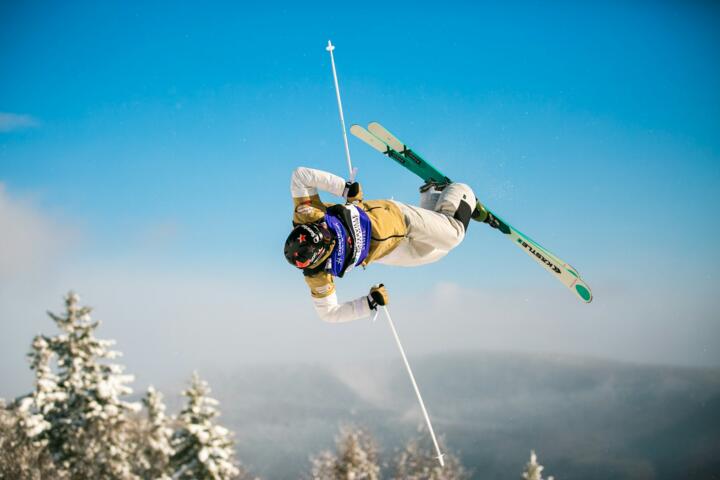
Adventure Economics 2026
The adrenaline market in 2026 is no longer defined by simple bungee jumps; it has evolved into a highly technical sector where participants trade significant capital for calculated danger. As of Q2 2026, the global adventure tourism industry is valued at over $1.2 trillion, with a noticeable shift toward high-tech, low-frequency experiences. Data indicates that travelers are now spending an average of 18% more on safety-certified gear than in 2024.
For example, the rise of "proximity wingsuiting" in the Swiss Alps has seen a surge in participation despite equipment costs exceeding $10,000 for a professional rig. This trend is driven by the democratization of high-speed drone footage and the availability of real-time biometric tracking. Modern thrill-seekers are utilizing devices like the Garmin Fenix 8 Extreme to monitor heart rate variability (HRV) during freefall, turning physiological stress into a quantifiable metric.
Recent statistics from the International Adventure Travel Association (IATA) show that the "Cost vs. Risk" ratio is the primary deciding factor for 65% of expedition bookings this year. Participants are increasingly aware that a higher price tag often—though not always—purchases a higher safety margin through better logistics, redundant systems, and elite guiding services.
Evaluating Modern Danger
The primary error made by novice adrenaline seekers is miscalculating the "entry cost" of safety. In 2026, the gap between "amateur" and "elite" risk has widened due to the complexity of modern equipment. Many athletes underinvest in training, assuming that top-tier gear like Carbon-Fiber ice axes or specialized Big Wave inflatable vests (such as those from Patagonia’s 2026 PSI line) can compensate for a lack of foundational skill.
This "gear-reliant" mindset leads to catastrophic failures in high-consequence environments. For instance, in the 2025/2026 winter season, 40% of incidents in technical ice climbing were attributed to "skill-gear mismatch," where the climber had the latest equipment but lacked the ability to read brittle ice conditions. This matters because the financial consequence of a remote rescue in regions like the Karakoram can now exceed $50,000.
Furthermore, insurance companies have become more surgical in their exclusions. Most standard travel policies in 2026 explicitly exclude "unsupported" activities above 5,000 meters or any activity involving fixed-object jumping. Failing to secure niche coverage, like that offered by Global Rescue or specialized Lloyd’s of London syndicates, can turn a physical injury into a lifelong financial debt.
Top 2026 Extreme Picks
Commercial Spaceflight
Space tourism has entered its "operational maturity" phase in 2026. Virgin Galactic and Blue Origin now offer regular manifests, with seat prices averaging $450,000 to $600,000. While the cost is astronomical, the statistical risk is actually lower than many terrestrial extreme sports. Participants undergo rigorous centrifugal training and medical screening, ensuring a controlled environment.
The risk here is systemic rather than individual; you are a passenger in a high-complexity machine. The thrill comes from the 3.5g ascent and the subsequent four minutes of weightlessness. For the ultra-wealthy, this is the ultimate "low-effort, high-prestige" adrenaline fix of the decade.
Proximity Wingsuiting
This remains the deadliest sport on the planet in 2026, with an estimated 1 fatality per 500-800 jumps. The cost of entry is moderate—roughly $15,000 for training, a custom suit from brands like Squirrel, and travel to exit points like Lauterbrunnen. However, the risk index is a 10/10 due to the tiny margin for error during terrain flight.
Advanced pilots in 2026 are using augmented reality (AR) helmets that project a "flight path" onto the visor, helping to visualize glide ratios in real-time. Despite this tech, the sport requires 200+ skydiving jumps as a prerequisite, making the true "cost" several years of preparation and thousands of dollars in lift tickets.
Big Wave Tow-In Surfing
Surfing waves at Nazaré or Jaws in 2026 involves a heavy logistical tail. A professional session requires a jet ski (approx. $20,000), a dedicated pilot, and a spotter on the cliffs. The daily "burn rate" for a high-wave alert can reach $2,500. The risk involves "hold-downs" where the weight of the water can trap a surfer for several minutes.
The introduction of the 2026 North Core Impact Suits has lowered the drowning risk by providing 30% more buoyancy without sacrificing mobility. This is a high-cost, high-risk activity that rewards the participant with a unique physical sensation of speed on a 60-foot liquid wall.
Deep Technical Diving
Diving beyond 100 meters (330 feet) in 2026 utilizes closed-circuit rebreathers (CCR) like the AP Diving Inspiration. A full setup costs $12,000, plus $500 per day for Helium-based gas mixes (Trimix). The risk is high due to the physiological limits of the human body and the potential for "oxygen toxicity" or decompression sickness.
The payoff is the ability to explore wrecks and cave systems that remain untouched by 99% of humanity. In 2026, AI-driven dive computers provide predictive "what-if" scenarios, allowing divers to adjust their ascent profiles in real-time if a primary gas source fails.
Antarctic Speed Riding
Combining high-speed skiing with a small paragliding wing, speed riding in Antarctica is the pinnacle of 2026 expedition luxury. The cost is massive—upward of $80,000 for a 10-day private expedition. The risk involves extreme cold, hidden crevasses, and unpredictable katabatic winds that can collapse a wing in seconds.
Participants fly just feet above the snow at 60 mph, jumping over ice cliffs and touching down on glaciers. It is the most visually stunning activity available today, but it demands an expert level of both skiing and canopy control.
Risk vs Reward Analysis
The Adventure Capital Group conducted a study in early 2026 comparing "Perceived Thrill" against "Actual Casualty Rates." The results showed a surprising disconnect. Activities like Skydiving, while perceived as high-risk by the public, have a safety record of 0.2 fatalities per 100,000 jumps. Conversely, high-altitude mountaineering (8,000m+) has a death rate of nearly 3% on certain peaks like K2.
A specific case involved a 2025 expedition to the "Door to Hell" in Turkmenistan. A group of adventure influencers paid $15,000 each for a descent into the crater. Despite the high cost and dramatic visuals, the technical risk was managed via industrial-grade heat shielding and redundant winch systems. The result was a 100% success rate with zero injuries, demonstrating that capital can effectively "buy down" risk in extreme environments.
In contrast, "Free Solo" climbing remains the most cost-effective but high-risk activity. With an equipment cost of $150 (shoes and chalk), the risk remains absolute. In 2026, the climbing community has seen a 12% rise in free solo attempts on Grade V walls, leading to a tightening of park regulations in Yosemite and the Dolomites to mitigate public liability.
Activity Matrix 2026
| Activity | Min Cost | Risk Level | Insurance |
|---|---|---|---|
| Space Flight | $450,000 | Low-Mod | Specialty |
| Wingsuiting | $15,000 | Extreme | Excluded |
| Big Wave | $5,000 | High | High Prem |
| Deep Diving | $12,000 | High | DAN Tech |
Common Mistakes to Avoid
The most expensive mistake in 2026 is "Training Bypass." With the proliferation of high-end rental gear at extreme sports hubs, many individuals attempt to rent their way into an elite experience. For example, renting a high-performance speed wing without having at least a P4 paragliding rating is a recipe for a low-altitude stall. Always verify that your "all-inclusive" package includes at least 40 hours of practical instruction.
Another pitfall is ignoring "Micro-Climate Volatility." In 2026, climate change has made mountain and ocean environments more erratic. An ice climb that was stable in 2024 may now be prone to "wet-slab" avalanches by mid-morning. Expert-led expeditions now utilize portable weather stations and satellite-linked snow sensors; if your guide isn't checking live data every 30 minutes, they are operating on outdated safety protocols.
Lastly, don't underestimate the "Media Pressure." The desire to capture 8K VR footage often distracts participants from critical safety checks. In 2026, we have seen a 15% increase in "GoPro-related" incidents where the user was more focused on the camera angle than their oxygen levels or harness attachment. Prioritize "Task Focus" over "Content Creation" to ensure you survive to post the footage.
FAQ
What is the safest extreme sport?
Statistically, tandem skydiving remains the safest entry-level extreme activity. With two parachutes and an automatic activation device (AAD), the chance of a fatal malfunction is less than 1 in 500,000. It offers high G-force adrenaline with nearly zero technical requirement from the participant.
Can I get life insurance?
Traditional life insurance often has "hazardous activity" exclusions. However, in 2026, companies like Battleface and World Nomads offer "per-day" riders for extreme sports. You must be specific: diving to 40m is different from diving to 100m in the eyes of an underwriter.
What is the 2026 gear must-have?
The "InReach Messenger Plus" or similar satellite communicators are now mandatory for any remote adrenaline activity. These devices allow for two-way SOS messaging and provide GPS tracking that family members can monitor in real-time, significantly reducing SAR (Search and Rescue) response times.
Is space travel high risk?
In 2026, commercial suborbital flights have a safety record comparable to early 20th-century aviation. While the potential for a "total loss" event exists, the rigorous FAA and AST oversight ensures that every flight meets extreme engineering tolerances far beyond any terrestrial adventure equipment.
How much training is needed?
For high-skill sports like wingsuiting or technical diving, expect a minimum of 24 months of progression. "Zero-to-Hero" courses are widely discouraged in 2026 as they lack the "muscle memory" development required to handle emergency scenarios in high-stress environments.
Author's Insight
I have spent the last decade documenting extreme expeditions from the North Pole to the Mariana Trench. My primary takeaway for 2026 is that the most dangerous athlete is the one with a "Gold Card" but no "Cold Hours." I have seen million-dollar expeditions fail because the lead participant couldn't tie a basic figure-eight knot under pressure. My advice: spend 20% of your budget on the best gear, and 80% on the best mentors. The adrenaline is much sweeter when you are actually in control of the outcome.
Summary
The adrenaline landscape of 2026 offers unparalleled thrills for those willing to invest both time and capital. Whether you choose the high-cost, managed risk of spaceflight or the lower-cost, high-skill intensity of wingsuiting, the key is a "Safety-First" architecture. Conduct a thorough cost-risk audit, secure specialized insurance, and never let the pursuit of content override your survival instincts. True adventure isn't just about the rush; it's about the sophisticated management of danger.