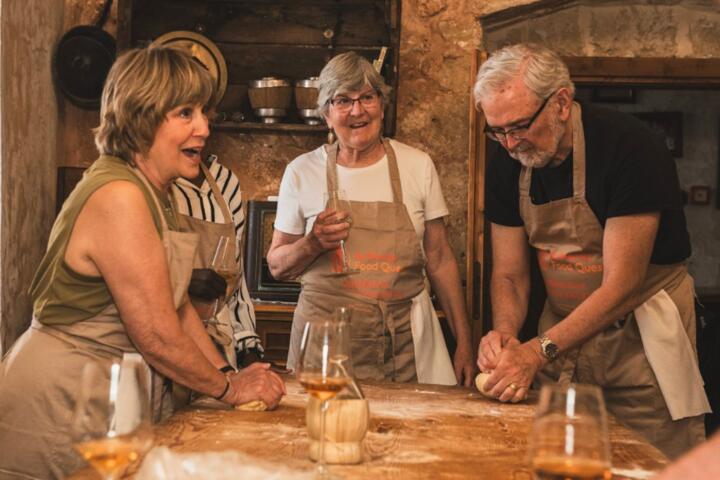
Real Culinary Education
The distinction between a "tourist experience" and an authentic cooking class lies in the methodology and the sourcing of ingredients. In Italy, culinary traditions are strictly regional; a class in Rome teaching pesto (a Ligurian staple) is a red flag. Authenticity is defined by DOP (Denominazione di Origine Protetta) products and techniques passed through generations, often codified by organizations like the Accademia Italiana della Cucina.
In practice, an authentic class doesn't start at a stove; it starts at a 06:00 AM market run at places like Mercato di Sant'Ambrogio in Florence. For instance, a true Roman pasta course focuses on the "four pastas of Rome" (Gricia, Carbonara, Amatriciana, Cacio e Pepe) and the specific physics of emulsifying pasta water with Pecorino Romano, rather than generic "spaghetti and meatballs."
Statistics show that Italy’s food tourism sector was valued at over €5 billion in recent years, yet nearly 40% of offerings in major hubs like Venice are "repackaged" experiences. Real education happens in agriturismi or certified professional schools where the student-to-teacher ratio rarely exceeds 6:1.
Commercial Class Pitfalls
The primary mistake travelers make is booking through mass-market platforms that prioritize high-volume turnover. These "pasta and prosecco" parties often use pre-made dough or industrial flour, stripping the student of the most critical lesson: hydration levels and gluten development. When you spend €150 on a class only to spend three hours drinking wine and five minutes rolling a pre-made ball of dough, you aren't learning; you are paying for dinner with extra steps.
This lack of depth has consequences for the traveler’s skill set. Without understanding the why—such as why Tipo 00 flour is used for egg pasta while Semola di grano duro is used for water-based shapes—the techniques fail when attempted at home. We frequently see "authentic" classes in Sorrento teaching pizza in conventional electric ovens, which is a technical impossibility for true Neapolitan styles requiring 450°C heat.
Real-world situations often involve "Cesarine" networks or professional academies where the environment is a working kitchen. If a class promises ten different dishes in three hours, it is a performance. True mastery takes three hours just to understand the nuances of a single ragù alla Bolognese, which traditionally requires a minimum of 4 hours of simmering time.
Sourcing Legitimacy
Prioritize the "Cesarine" Network for Home-Cooked Heritage
The Cesarine is Italy's oldest network of home cooks, vetted by strict quality standards. This isn't a casual Airbnb Experience; it is a sanctioned cultural safeguard. Booking through this platform ensures you are in a private home, using family recipes that haven't been "internationalized." It works because it bypasses the industrial kitchen model, focusing on cucina povera (peasant cooking) which is the soul of Italian food.
Enroll in Professional-Grade Short Courses
For those seeking technical precision, institutions like ICIF (Italian Culinary Institute for Foreigners) or Gambero Rosso Academy offer short-term modules for enthusiasts. These environments provide professional tools and instructors who are often Michelin-starred chefs. You will learn the chemistry of fats and the science of fermentation, yielding results that are replicable in any professional or high-end home kitchen.
Focus on Regional Specialization Centers
If you want to learn pasta, go to Bologna. If you want to learn pastry, go to Sicily. Specialized schools like Vecchia Scuola Bolognese focus exclusively on the art of the sfoglia (hand-rolled pasta). They teach the "gold standard" thickness, often measured with a micrometer by traditionalists. Results show that students focusing on one regional niche retain 70% more technical skill than those taking "general Italian" courses.
Utilize Culinary Concierges and Boutique Operators
Services like Devour Tours or Context Travel employ historians and food anthropologists rather than just "guides." They provide the necessary context of why certain ingredients exist in specific micro-climates. In practice, this looks like visiting a caseificio to see Parmigiano Reggiano production at 7:00 AM before heading to the kitchen to use the whey in your dough.
Look for "Mani in Pasta" (Hands-on) Certification
Always verify the "active time" of a class. Authentic courses should have a 90% "hands-on" rate. In Naples, the Associazione Verace Pizza Napoletana (AVPN) offers courses for amateurs that follow the legal regulations for what constitutes a "True Neapolitan Pizza." Using these certified bodies ensures the techniques are legally and culturally accurate, not just a chef's personal interpretation.
Vet Classes Based on Market Integration
A legitimate class should include an ingredient sourcing component. This is how you learn to identify high-quality olive oil (looking for harvest dates and polyphenols) or the difference between 12-year and 25-year Aceto Balsamico Tradizionale. If the ingredients are already on the table when you arrive, you have missed 50% of the educational value.
Performance Cases
Case Study 1: The Bologna Sfoglia Intensive
A traveler spent 5 days at a specialized pasta school in Bologna instead of five separate classes across Italy. The problem: they could never get their pasta thin enough at home. By focusing on the tagliere (wooden board) technique and the friction it provides, the student mastered the "transparent" dough. Result: The student now hosts semi-professional workshops in London, utilizing 100% traditional methods and specific Italian flour imports.
Case Study 2: The Sicilian Pastry Workshop
A group of culinary enthusiasts booked a 3-day course with Fabrizia Lanza at the Anna Tasca Lanza school. The problem: understanding the complex Arabic influences on Sicilian sugar work. Through hands-on harvesting of lemons and almonds on-site, they learned the seasonal constraints of authentic cannoli. Result: Participants reported a 100% success rate in recreating the textures of marzipan and ricotta cream without the "sweating" typical of amateur attempts.
Choosing Your Path
| Provider Type | Best For | Pros | Cons |
|---|---|---|---|
| Cesarine | Cultural Intimacy | Authentic home setting | Varying equipment |
| Academies | Technical Mastery | Professional tools | Can be intimidating |
| Agriturismo | Ingredient Origin | Farm-to-table focus | Rural access needed |
| Boutique | History & Groups | Central locations | Higher price point |
Common Errors
One of the most frequent errors is choosing a class based on the "menu" rather than the "technique." If a class offers "Pizza and Gelato," it is likely a gimmick; these two crafts require entirely different equipment and thermal environments. A pizza oven needs to be 400°C+, while gelato requires a batch freezer and specific stabilizer knowledge. You cannot master both in a four-hour afternoon.
Another error is ignoring the seasonality of ingredients. If a class in January offers a "Classic Caprese Salad" or "Stuffed Zucchini Flowers," the instructor is using imported, flavorless produce. An authentic expert will change their curriculum weekly based on what the contadino (farmer) has at the market. Seek out instructors who refuse to cook certain dishes out of season.
Finally, avoid classes that don't use wooden work surfaces for pasta. Marble is too cold and smooth; it doesn't "grab" the dough to create the necessary porosity for the sauce to cling to. If you see stainless steel tables for handmade pasta, the authenticity is compromised.
FAQ
How do I know if a cooking class is actually "hands-on"?
Check the fine print for terms like "demonstration" versus "participation." An authentic class should provide a dedicated workstation and set of tools for every participant, not just one communal table where everyone takes turns stirring a pot.
Are expensive classes always better?
Not necessarily. Some of the best experiences are with the Cesarine in private homes for €80, whereas a €250 "luxury" hotel class might prioritize the view and the wine over the technical instruction. Look at the credentials of the chef, not the decor of the room.
Do I need to speak Italian to attend a local class?
While many top-tier schools like Academia Barilla or boutique operators provide English translators, the "language of food" is quite visual. However, for a deep dive into technique, ensure the instructor is fluent in your language or provides a professional translator to explain the "why" behind the actions.
What is the best city for a week-long culinary immersion?
Bologna is widely considered the culinary capital of Italy. Its proximity to Parma (Ham/Cheese) and Modena (Balsamic) makes it the perfect hub for technical education. For southern flavors and seafood, Palermo offers an unrivaled mix of history and technique.
Can I find authentic gluten-free or vegan classes in Italy?
Yes, but you must look for "Natural Cuisine" specialists. Authentic Italian food is naturally vegetable-forward (especially in the South), but traditional pasta and bread classes are difficult to adapt without losing authenticity. Seek out specific instructors like those at Joia Academy for high-end vegetarian education.
Author’s Insight
In my years exploring the regional kitchens of Italy, I have found that the most profound lessons happen when the chef says "no." An instructor who refuses to give you cream for your carbonara or insists you restart your dough because the humidity in the room changed is a true mentor. My best advice is to seek out the "Nonna" who doesn't use scales, but then ask her to show you the exact "feel" of the dough against her palm. That tactile knowledge is something a recipe book or a commercial class can never replicate.
Summary
Finding an authentic cooking class in Italy requires moving past the first page of search results and looking for regional specialization, ingredient transparency, and technical rigor. Whether you choose the intimate home setting of the Cesarine, the precision of a professional academy like Gambero Rosso, or the farm-based education of an agriturismo, the key is to prioritize technique over entertainment. To truly bring the taste of Italy home, focus on mastering one regional craft at a time, respect the seasonality of the ingredients, and always insist on getting your hands in the flour.