Urban Exploration Costs
The "Tourist Tax" is a real economic phenomenon where visitors pay up to 40% more for basic services than residents. In cities like Zurich or Singapore, a simple lunch and museum entry can easily top $100. However, these hubs are often designed with public accessibility in mind, offering world-class infrastructure that costs nothing if you know where to look.
For example, the British Museum in London houses over 8 million works and charges $0 for general admission, whereas a similar private gallery might charge £25. In New York, the Staten Island Ferry provides a direct view of the Statue of Liberty for free, saving the $24.50 fee charged by commercial cruise lines. High-cost cities often subsidize culture to maintain global status, creating a loophole for savvy travelers.
According to Mercer’s 2025 Cost of Living Survey, urban inflation has pushed "discretionary spending" up by 12% year-on-year. This makes finding high-quality free activities a necessity for long-term travelers rather than just a frugal choice. The goal is to find experiences where the "free" version is actually the superior version.
Budgeting Blunders
Most travelers fall into the "City Pass Trap," prepaying $150 for a bundle of attractions they won't actually visit. This creates a psychological pressure to "get your money's worth," leading to exhaustion and missed authentic moments. People often assume that "free" equals "low quality," which is a misconception that leads to overspending on mediocre, commercialized tours.
Another issue is failing to account for "leakage"—the small costs like $5 bottled waters or $15 transit surcharges that add up to hundreds over a week. In Tokyo, taking a taxi instead of the Tokyo Metro can cost you $50 for a 15-minute ride. These errors stem from a lack of pre-trip research into local subsidies and digital resources designed for residents.
When you rely on top-ten lists from generic travel blogs, you end up at overcrowded spots that have lost their charm. The consequence is a "sterilized" travel experience where you see the same sights as everyone else but pay a premium for the privilege. True expertise lies in finding the "hidden-in-plain-sight" assets that locals use every day.
Mastering Public Commons
Public parks in expensive cities are not just patches of grass; they are outdoor museums. Paris spends millions annually on the Jardin du Luxembourg and the Tuileries, offering free high-end seating, art installations, and puppet shows. In Singapore, the Gardens by the Bay offers the "Garden Rhapsody" light show twice nightly for $0, providing a futuristic experience that outshines many paid light festivals.
Leveraging "First Days"
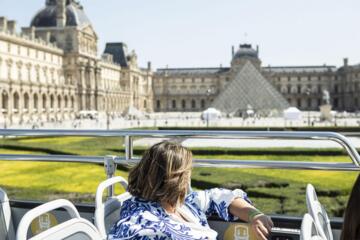
Many world-class institutions have specific windows for free entry. In Paris, the Louvre and Musée d'Orsay offer free admission on the first Sunday of every month. In New York, the Bronx Zoo is free on Wednesdays (with advance reservation). By aligning your itinerary with these "Free Access" windows, you can save $30-$50 per person per venue.
Digital Local Intel Tools
Use apps like Eventbrite or Meetup to find local gallery openings, book readings, or outdoor fitness classes. In London, the Dice app often lists free tickets for up-and-coming bands at venues in Camden or Shoreditch. These platforms connect you to the pulse of the city's actual residents, ensuring the quality of the experience is high.
Free Architecture Tours
Instead of a $40 bus tour, use "Open House" weekends. Cities like Chicago, London, and Barcelona have an annual Open House Worldwide event where private skyscrapers and historic landmarks open their doors to the public for free. You get access to rooftops and interiors that even paying tourists never see.
High-End Window Shopping
In Tokyo, the department stores (Depachika) in Ginza, like Mitsukoshi, offer free gourmet food tastings that are essentially a multi-course meal of high-end Japanese cuisine. You can sample $100 melons or Wagyu beef slices without spending a yen. It’s a sensory experience that provides deep insight into Japanese food culture.
Optimizing Transport Hubs
Airports and train stations in expensive cities often double as cultural centers. Changi Airport in Singapore has a free cinema and butterfly garden. In Munich, the airport features a free "Visitors Park" with historic aircraft. Utilizing these "in-between" spaces effectively can eliminate the need for paid entertainment during transit days.
Free Education and Lectures
Ivy League universities and prestigious institutions like Gresham College in London offer free public lectures by world-leading experts. You can sit in a 400-year-old hall and listen to a talk on astrophysics or history for $0. This is a high-E-E-A-T way to spend an evening that beats any paid tourist bar.
Tactical Success Stories
A solo traveler in Tokyo spent seven days exploring the city with a daily entertainment budget of $0. By using the free observation deck at the Tokyo Metropolitan Government Building (saving $20 over Tokyo Skytree) and attending free morning Sumo practices at Arashio-beya, they experienced the city's peaks and traditions without a single ticket purchase. The result was a total saving of $450 compared to a standard tour package.
In New York, a family of four used the "Culture Pass" (available via the NYC Public Library for temporary residents/visitors with library cards) and targeted "Pay What You Wish" hours at the Whitney Museum. They visited five major museums for a total of $20 in "donations," saving roughly $380 in standard admission fees. They redirected these funds toward a single high-quality meal, balancing their budget perfectly.
Resource Comparison
| Activity Category | Typical Paid Version | Superior Free Alternative | Estimated Savings |
|---|---|---|---|
| City Views | The Shard (London) - £32 | Sky Garden (Booking required) | $40+ |
| Water Tours | Hudson River Cruise (NYC) - $45 | Staten Island Ferry | $45 |
| Art & Culture | Private Galleries - $25 | National Museums (UK/DC) | $25 |
| Local History | Guided Bus Tour - $50 | Free Walking Tours (Tip-based) | $35 |
| Botany | Kew Gardens - £20 | Hampstead Heath Pergola | $25 |
Avoiding Frugal Burnout
One major mistake is walking 30,000 steps to save $3 on a bus fare. This leads to physical exhaustion and ruins the next day. Use "daily caps" on transit cards like London’s Oyster or New York’s OMNY; once you hit the limit, every ride thereafter is free. Don't sacrifice your health for pennies.
Another error is ignoring "suggested donations." If a museum says "Free for residents, $30 for visitors," and you try to sneak in, you risk an embarrassing confrontation. Always check the fine print on "Pay what you wish" policies—some are only for locals, while others like the Met (formerly) have changed rules recently. Use the Free Museum Check website to stay updated on current policies.
FAQ
Are "Free Walking Tours" actually free?
Technically, yes, but they operate on a tip-to-value model. You should expect to pay $10-$15 per person. It is still 70% cheaper than a private tour and the guides are often more motivated because they work for tips.
How do I find free events in real-time?
Search Twitter or Instagram for the hashtag #Free[CityName], e.g., #FreeNYC. Locals often post about pop-up events, free samples, or "secret" concerts that don't make it onto major travel websites.
Do free activities require advance booking?
Yes, increasingly so. Spots like London's Sky Garden or the Reichstag Dome in Berlin are $0 but book out weeks in advance. My advice is to check booking calendars exactly 21 days before your visit.
Is the quality of free attractions lower?
Often, it is higher. National museums in London or the Smithsonian in DC have larger budgets and better curation than small, for-profit "experience" museums that charge $40 for Instagram photos.
Can I eat for free in these cities?
Not "meals," but you can find food-centric experiences. Look for "Language Exchanges" in bars; many provide free snacks or pizza to encourage attendees. Community gardens also occasionally host free public harvest lunches.
Author’s Insight
After a decade of navigating cities like San Francisco, Hong Kong, and Paris, I’ve realized that the most "expensive" experiences are often the most generic. I once spent $60 for a cocktail at a "famous" rooftop bar in Singapore, only to find the view better—and the atmosphere more authentic—at a public rooftop garden nearby. My top tip is to follow the "Student Path": find where local university students spend their time. They are the masters of finding high-quality, zero-cost culture, from underground film screenings to free jazz in the park. Authentic travel isn't about how much you spend; it's about the density of the experience per dollar.
Summary
The secret to mastering expensive cities lies in shifting your mindset from "consumer" to "resident." By utilizing public resources, timing your visits to coincide with free entry windows, and using digital tools to find local events, you can enjoy a premium experience for a fraction of the cost. Start by booking your free tickets for major landmarks at least three weeks out and always check for "Pay What You Wish" hours. True luxury is having the knowledge to access the best a city offers without being limited by a price tag.