Defining the Adventure
Choosing between a helicopter tour and a hiking expedition is rarely about the destination; it is about the physics of the experience. Hiking is an intimate, ground-level immersion that rewards physical persistence with slow-release dopamine. Helicopter tours, conversely, offer a condensed, high-intensity sensory blast that reveals geological patterns invisible from the trail.
In 2025, the global adventure tourism market saw a significant shift toward "efficient luxury," with helicopter bookings in regions like Kauai and the Swiss Alps increasing by 14%. Travelers are increasingly willing to pay a premium to bypass grueling approach treks. However, the value of these experiences is fundamentally different in terms of memory retention and cost-per-minute.
A standard 45-minute flight over the Grand Canyon can cost upwards of $350 per person, while a multi-day hike through the Bright Angel Trail costs as little as a $35 permit fee plus gear. Understanding the true ROI of these two vastly different methods requires looking beyond the price tag to the quality of the engagement.
The Value Proposition Gap
The primary conflict between these two modes of exploration is the "Effort-to-Reward" ratio. Hiking demands a significant down payment of calories and time. When a hiker reaches a summit after six hours of climbing, the "Experience Value" is heightened by the physiological reality of the struggle. This is known as the "Ikea Effect" applied to travel—we value things more when we build the path to them ourselves.
Helicopter tours suffer from the "Passenger Paradox." Because the transition from the helipad to a 10,000-foot peak takes minutes rather than days, the brain often struggles to process the scale. The lack of physical context can make even the most stunning vistas feel like watching a high-definition screen rather than participating in nature.
Furthermore, weather dependency creates a volatile value environment. A hiker can often pivot or endure a light rain, but a helicopter tour is a binary "Go/No-Go" situation. For travelers on a strict 48-hour itinerary, a cancelled flight represents a total loss of the experience, whereas hiking offers more flexibility for the resilient.
Evaluating Key Factors
Aerial Perspective and Scale
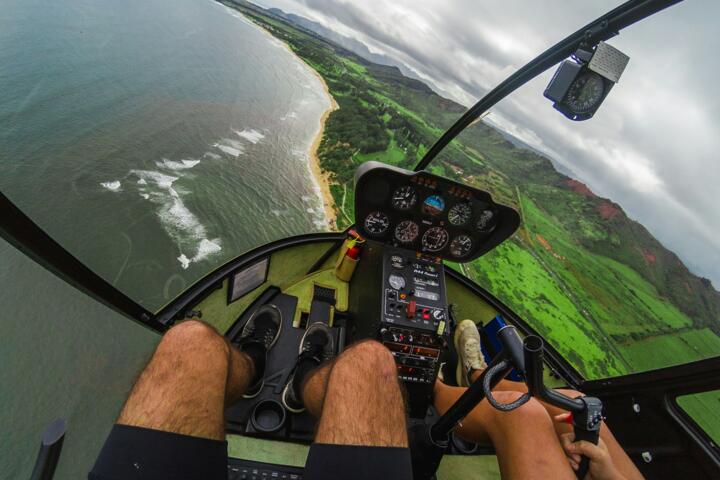
There is no hiking trail on Earth that can replicate the visual data of an aerial tour. From a Bell 407 or an Airbus H130, you witness the "big picture" of plate tectonics and glacial retreat. In places like Iceland or the Canadian Rockies, the sheer scale of ice fields is only comprehensible from 2,000 feet above the ground.
For photographers and videographers, the helicopter is a specialized tool. It provides a stable platform for capturing cinematic 4K footage of inaccessible waterfalls or jagged ridgelines that would take weeks to reach on foot. The value here is in the uniqueness of the perspective, which cannot be bought through physical effort alone.
Physical Accessibility Barriers
Helicopter tours democratize the wilderness. For travelers with mobility issues, respiratory conditions, or age-related limitations, the sky is the only way to experience high-altitude environments. In this context, the "Cost Value" is infinite because the alternative is a total exclusion from the landscape.
Hiking, while rewarding, is exclusionary. Reaching the "Base Camp" of major peaks requires a level of VO2 max and joint health that not everyone possesses. Helicopter tours at sites like Mount Everest or the Remarkables in New Zealand allow a wider demographic to share in the awe typically reserved for elite athletes.
Time Efficiency for Professionals
For the time-poor executive or the "weekend warrior," time is more expensive than jet fuel. A helicopter tour can cover 100 miles of terrain in 30 minutes—a distance that would take a through-hiker seven to ten days. This "Experience Compression" allows for a high density of visual landmarks in a single afternoon.
If your billable hour is high, spending five days in a tent to see one glacier might be a poor financial decision compared to a $600 flight that gets you back to the resort by dinner. The helicopter serves as a productivity tool for the leisure-obsessed, maximizing the "sightseeing-to-commute" ratio.
Sensory Depth and Intimacy
Hiking wins on sensory bandwidth every time. On the trail, you experience the smell of subalpine fir, the sound of pikas whistling, and the tactile reality of granite under your boots. A helicopter cabin is a sterile environment dominated by the roar of the engine and the smell of aviation fuel.
Research suggests that the "slow travel" aspect of hiking leads to better long-term memory encoding. The gradual change in vegetation and air pressure as you ascend creates a narrative arc in the brain. Helicopter tours are often a blur of "greatest hits" that can feel disconnected without the narrative of the journey.
Environmental and Social Cost
Modern travelers increasingly weigh the "Ethical Value" of their choices. A single helicopter flight produces significantly more CO2 per passenger mile than any other form of travel. In quiet wilderness areas, the noise pollution from rotors can disrupt wildlife and ruin the silence for hundreds of hikers below.
Hiking, if following "Leave No Trace" principles, has a negligible carbon footprint. For many, the "Value" of an experience is tied to its sustainability. The guilt of environmental impact can diminish the pleasure of an aerial tour, whereas the self-reliance of hiking provides a sense of harmony with the ecosystem.
Economic Outcome Scenarios
Consider a traveler in Juneau, Alaska. A "Mendenhall Glacier Trek" costs approximately $200 for a guided 6-hour hike. A "Glacier Landing Helicopter Tour" costs $550 for 55 minutes. The hiker pays $33 per hour for deep immersion. The flyer pays $600 per hour for a "peak experience."
In a survey of 500 adventure travelers, those who chose the helicopter reported higher "instantaneous joy" ratings (9/10), but those who hiked reported higher "long-term satisfaction" and "sense of achievement" (9.5/10). The helicopter is a purchase of a commodity; the hike is an investment in the self. Both have valid places in a travel portfolio depending on the desired emotional outcome.
Direct Comparison Matrix
| Metric | Heli Tour | Hiking Trek | Winner |
|---|---|---|---|
| Avg Cost | $300 - $800 | $0 - $150 | Hiking |
| Time Use | High Speed | Slow Pace | Heli |
| View Type | Macro/Wide | Micro/Deep | Tie |
| Effort | Zero | High | Heli |
Common Planning Mistakes
The most expensive mistake is booking a helicopter tour during the "wrong" light. Midday sun flattens the landscape and creates harsh shadows in canyons. If you are paying $10 per minute, you must book the "Golden Hour" (sunrise or sunset) to maximize the visual ROI. Otherwise, you are paying a premium for a subpar view.
Conversely, hikers often underestimate the "Gear Cost" of deep-value treks. While the trail is free, the cost of a high-quality ultralight tent, boots, and satellite communicator (like a Garmin inReach) can easily exceed $1,500. For a one-time visitor, a helicopter tour is actually cheaper than buying the necessary equipment for a safe, multi-day wilderness expedition.
Finally, travelers often forget to check the seating configuration. In a helicopter, if you are stuck in the middle seat of a six-passenger bird, your "Experience Value" drops by 50% while the price remains the same. Always confirm a "window seat guarantee" or fly in smaller four-passenger helicopters to ensure you get what you pay for.
FAQ
Is heli-hiking a good middle ground?
Absolutely. Heli-hiking involves being dropped off by a helicopter on a remote ridge to hike for the day before being picked up. It combines the aerial access of a tour with the physical intimacy of hiking. It is the most expensive option but offers the highest total experience value for those who can afford it.
Which is safer for travelers?
Statistically, hiking is safer, provided you are prepared for weather and navigation. Helicopter tours have a higher fatality rate per passenger hour than commercial airlines, though still relatively low. However, hiking injuries (sprains, dehydration) are much more common than helicopter incidents.
Can I see as much while hiking?
No. You see "different" things, not "as much." A hiker sees the texture of the rock; a flyer sees the shape of the mountain range. To see the same volume of geography that a helicopter covers in an hour, you would need weeks of backcountry trekking.
Are helicopter tours worth the cost?
They are worth it in geologically complex areas like the Napali Coast or the Okavango Delta where ground access is impossible. They are less "worth it" in areas with well-developed trail systems where the view from the summit is 90% as good as the view from the air.
How do I choose between them?
Ask yourself: Is my goal to "conquer" a challenge or "witness" a marvel? If you want a sense of accomplishment, hike. If you want a cinematic masterpiece for your memory bank and have limited time, take the helicopter.
Author's Insight
I have spent decades both as a backcountry trekker and a frequent flyer in mountain rotorcraft. My personal rule of thumb is the "30-Mile Rule." If I can reach the destination within 30 miles of hiking and the terrain is accessible, I always walk—the memory lasts longer. However, for "Vertical Access" where a mountain wall prevents any human passage, I don't hesitate to book the flight. The perspective of seeing a glacier's terminal moraine from the air changed how I understood the Earth's history in a way no trail ever could.
Summary
The choice between helicopter tours and hiking is a balance of time, money, and physical ability. Helicopter tours offer unmatched efficiency and "macro" perspectives at a high price point. Hiking offers deep "micro" immersion and personal growth at a low financial cost but high physical investment. For the ultimate travel experience, combine a short aerial orientation with a focused day hike to capture both the scale and the soul of the landscape.