Mastering Food Economics
Eating well while traveling isn't about deprivation; it's about shifting your spending from "convenience premiums" to "local sourcing." In many European and Asian cities, the price difference between a meal at a restaurant on a main square and a bistro three blocks away can be as high as 40%. Understanding the local food ecosystem is the first step toward significant savings.
For instance, in Tokyo, the "depachika" (department store basement food halls) slash prices on high-end bento boxes by 30-50% starting at 7:00 PM. In Poland, "Milk Bars" (Bar Mleczny) offer government-subsidized, nutritious meals for under $5. Data shows that travelers who cook just one meal a day and shop at local markets save an average of $350 per month in mid-range destinations like Portugal or Thailand.
Practical expertise suggests that the most expensive way to eat is "on-demand" without a plan. When hunger hits in a high-traffic area, your decision-making defaults to the nearest, often most overpriced option. Real travel experts treat food like a logistical operation, identifying grocery hubs and "lunch specials" before they even leave their accommodation.
The High Cost of Ignorance
The most common mistake travelers make is equating "local food" solely with restaurants. Relying on TripAdvisor or Yelp often leads to "curated" experiences where prices are inflated for a Western audience. Failing to understand the regional "lunch culture" means paying double for the same calories during dinner hours.
In many cultures, dinner is a social event with a price tag to match, whereas lunch is functional. If you eat your largest meal at 8:00 PM in Italy or Spain, you are missing out on the "Menú del Día," a three-course fixed-price lunch that typically costs 10–15 Euros. Ignoring this pattern can lead to a food budget blowout within the first week of a trip.
Consequences go beyond finances; relying on cheap fast food or street snacks to save money often leads to "traveler’s fatigue" due to poor nutrition. This results in hidden costs, such as decreased productivity for nomads or the need for expensive supplements. The goal is to find the intersection of low cost and high nutrient density.
Strategic Nutrition Hacks
To eat well on a budget, you must utilize technology and local habits that the average tourist ignores. These methods are tested across various continents and economic climates.
Leveraging Surplus Food Apps
Apps like Too Good To Go and Karma are revolutions in food waste reduction that benefit the budget traveler. In cities like London, Paris, or New York, you can purchase "Magic Bags" from high-end bakeries, grocery stores (like Whole Foods or Marks & Spencer), and even sushi spots for about $4–$6. The value of the food inside is usually three times that amount. This is the most effective way to access premium proteins and fresh produce in expensive Tier-1 cities.
Utilizing Regional Grocery Chains
Understanding which grocery stores are for "show" and which are for "locals" is vital. In the UK, skip Waitrose and head to Aldi or Lidl. In the US, look for Trader Joe’s or regional discount chains like WinCo. These stores often have robust "ready-to-eat" sections that are significantly cheaper than deli counters. Buying staples like Greek yogurt, nuts, and seasonal fruit here prevents "impulse snacking" at expensive convenience stores like 7-Eleven or WHSmith.
Mastering the Midday Set Menu
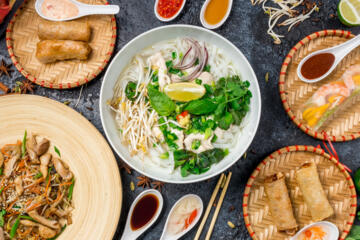
In Latin America, look for the "Almuerzo Ejecutivo," and in Southeast Asia, look for "Economic Rice" stalls (Cai Fan). These are standardized, high-volume meals designed for local workers. In Singapore, a Michelin-starred meal at a Hawker Centre (like Hawker Chan) can cost under $5. The key is to look for queues of locals in work attire between 12:00 PM and 1:30 PM. This guarantees high turnover, which means the food is fresh and the prices are regulated by local competition.
Strategic Use of Kitchen Facilities
Booking accommodation with a kitchen (via Airbnb or hostels) is a common tip, but the "expert" way to use it is through "batch prepping" breakfasts and snacks. Carrying a lightweight, collapsible silicone container (like those from Sea to Summit) allows you to carry leftovers. Hard-boiling a dozen eggs from a local market costs cents and provides a high-protein breakfast for a week, saving you $10 per day on café breakfasts.
Hydration and Beverage Economics
Paying for bottled water is a financial and environmental drain. In most of Europe and North America, tap water is excellent. Using a filtered bottle like LifeStraw or Grayl allows you to drink safely even in countries with questionable tap water (like parts of Mexico or Thailand), paying for itself in less than three weeks. Additionally, avoid ordering drinks at restaurants; the markup on a soda or beer is often 300%. Drink water at the table and enjoy a drink later at a local park or your balcony.
Navigating Markets Like a Local
Wet markets and farmers' markets offer the best prices, but only if you avoid the ones listed in guidebooks (like La Boqueria's front stalls in Barcelona). Walk to the very back of the market where the prices aren't displayed in English. In many cultures, prices drop significantly 30 minutes before closing. This is the best time to snag bags of "ugly" fruit or vegetables that are perfectly nutritious but won't last until the next day.
Real-World Savings Cases
Case 1: The Digital Nomad in Lisbon. A remote worker spent $1,200/month on food by eating out twice a day. By switching to the "Too Good To Go" app for dinner and shopping at Pingo Doce for breakfast supplies, they reduced their monthly spend to $450. They saved $750 monthly while maintaining a diet rich in fresh fish and local produce. This 62% reduction allowed them to extend their stay by two months.
Case 2: The Backpacker in Tokyo. A traveler initially spent $60/day eating at casual restaurants. By shifting their main meal to a "Lunch Set" ($8) and buying discounted 7:00 PM bento boxes from the basement of Takashimaya ($5), they dropped their daily food cost to $22. Over a 30-day trip, this saved them $1,140, which covered their internal flights and accommodation for the next leg of their journey.
Savings Checklist
| Strategy Category | Action Item | Estimated Savings |
|---|---|---|
| Technology | Download 'Too Good To Go' or 'Karma' | 60-70% per meal |
| Timing | Eat the main meal during 'Lunch Set' hours | 30-50% vs. Dinner |
| Logistics | Carry a reusable water filter bottle | $3-$5 per day |
| Sourcing | Shop at discount grocers (Lidl, Aldi, WinCo) | 40% vs. Mini-markets |
| Preparation | Batch cook breakfast or hard-boiled eggs | $70 per week |
Common Budget Pitfalls
One major error is the "Airport Tax." Buying a sandwich and water at an airport can cost $20. Always pack an empty water bottle and a high-calorie snack like almonds or a protein bar before heading to the terminal. Similarly, "Hotel Breakfasts" are rarely worth the $15–$25 surcharge. A local bakery or a grocery store yogurt will cost $3 and likely offer better quality.
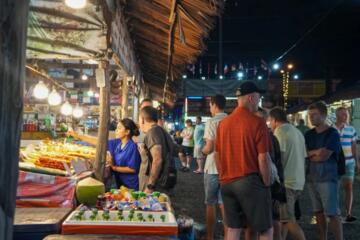
Another trap is "Street Food Blindness." While street food is often cheap, in highly touristic areas (like Khao San Road in Bangkok or Times Square carts), it can actually be more expensive and lower quality than a "hole-in-the-wall" local eatery two blocks away. Always check if prices are listed; if they aren't, you are likely paying the "tourist price."
FAQ
Is street food safe for budget travelers?
Generally, yes, if you follow the "high turnover" rule. Eat where there is a long line of locals, as this ensures the food hasn't been sitting out. Avoid raw vegetables washed in local water if you are in a high-risk region for waterborne illness.
How do I find local markets that aren't for tourists?
Search for "wholesale market" or "municipal market" in the local language on Google Maps. Avoid any market that has "International" or "Gourmet" in the title, as these cater to expats and tourists with higher price points.
Are food delivery apps worth it when traveling?
Usually, no. Apps like UberEats or Deliveroo add delivery fees, service fees, and often mark up the menu prices. Use them only to browse menus, then walk to the restaurant to order "to-go" and save 20-30%.
What are the best cheap staples to buy at grocery stores?
Focus on high-satiety foods: eggs, oats, bananas, peanut butter, and canned tuna. These require minimal or no cooking equipment and provide sustained energy for long days of sightseeing.
Can I eat healthy while staying on a budget?
Absolutely. Buying seasonal fruit from street vendors and rotisserie chickens from supermarkets (a "bachelor's handbag") provides lean protein and fiber for a fraction of the cost of a restaurant salad.
Author’s Insight
After five years of continuous travel across 40 countries, I’ve realized that my best meals never happened in restaurants with English menus. I once spent a month in Switzerland—one of the world's most expensive countries—and kept my food budget under $15 a day by strictly using Lidl and the "Too Good To Go" app for Coop Pronto shops. My secret weapon is always carrying a small kit consisting of a spork, a collapsible bowl, and a few packets of high-quality salt and chili flakes. Being able to turn a grocery store salad or a simple rotisserie chicken into a seasoned meal anywhere changed my travel experience. Don't be afraid to eat on a park bench; the view is usually better than in a crowded cafe anyway.
Summary
Reducing food expenses while traveling requires a proactive approach to sourcing and a willingness to adapt to local schedules. By utilizing surplus food apps, prioritizing lunch specials over dinner, and shopping at discount grocery chains, you can maintain a high standard of nutrition without the "tourist markup." Start by downloading a food waste app and locating the nearest discount supermarket the moment you land in a new city. These small logistical shifts turn food from a major expense into a manageable part of your travel strategy.