The Spiritual Fabric
Visiting a temple in Asia is not a tourist excursion; it is an entry into a living room of the divine. In places like Thailand, 95% of the population practices Buddhism, and the temple (Wat) serves as the community’s moral and social anchor. When you step onto these grounds, you are entering a space where the rules of the secular world are suspended in favor of ancient hierarchies and energetic boundaries.
For instance, in Bali’s Pura Besakih, the "Mother Temple," certain areas are restricted to practitioners only. I have seen visitors attempt to bypass these zones for a "better photo," resulting in immediate removal by the Pecalang (traditional security). Understanding that these sites are active places of worship—not museums—is the first step toward genuine cultural fluency. In 2023, Japan’s Kyoto city officials reported a 30% increase in "tourism friction" related to temple etiquette, highlighting the urgent need for visitor education.
Real-world data suggests that respectful tourists receive better access to unique ceremonies. At the Senso-ji in Tokyo, travelers who follow the Temizu (hand-washing) ritual correctly are often approached by English-speaking volunteers who offer deeper insights into the temple's history, an experience denied to those who rush through the gates.
Costs of Ignorance
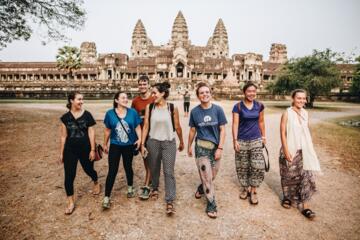
The most frequent error is treating sacred iconography as props for social media content. This "Instagramification" of spirituality has led to severe consequences, including deportation and permanent bans. In Cambodia, the Apsara Authority (which manages Angkor Wat) has strict codes; tourists wearing revealing clothing are now routinely denied entry at the ticket checkpoint, leading to lost time and non-refundable tour fees.
Another major pain point is the "Feet Faux Pas." In many Asian cultures, particularly in Thailand and Laos, the feet are considered the lowest and dirty part of the body. Pointing your feet toward a Buddha statue or a monk is a profound insult. I once witnessed a traveler in Chiang Mai get a stern public reprimand from a local elder for sitting with their legs outstretched toward the altar—a moment that ruined the atmosphere for everyone present.
The consequences of these lapses range from social embarrassment to legal action. In Sri Lanka, having a tattoo of Buddha that is visible can lead to arrest and deportation, as it is viewed as a desecration of the deity. These aren't just "cultural suggestions"; they are deeply held beliefs that dictate the legal framework of the host country.
Mastering the Dress Code: The 80% Coverage Rule
In almost every sacred site across Asia, the "Shoulders to Knees" rule is the absolute minimum. However, for 100% compliance, aim for 80% body coverage. This means long trousers or skirts and shirts that cover the upper arms. In India’s Sikh Gurdwaras, such as the Golden Temple in Amritsar, you must also cover your head—an often overlooked detail that can be solved by carrying a lightweight scarf.
The Art of the Silent Witness: Managing Noise and Movement
Silence is a form of offerings in many Eastern traditions. High-decibel conversations or the clicking of heavy boots can disrupt the meditative flow. In the Zen gardens of Kyoto, even the sound of a camera shutter is sometimes discouraged. Use silent shutter modes on your Sony A7IV or iPhone, and keep your voice at a "library whisper" to maintain the sanctity of the space.
Sacred Geometry: Navigating Clockwise and Upward
In Hindu and Buddhist traditions, circumambulation (walking around a stupa or shrine) should always be done in a clockwise direction. This follows the path of the sun and represents the alignment with the cosmic order. At the Borobudur in Indonesia, following the correct path allows you to view the reliefs in their intended narrative sequence, turning a walk into a spiritual education.
Interacting with the Clergy: Boundaries and Blessings
Monks and priests occupy a high social strata. In Thailand, women must never touch a monk or hand something directly to them; items should be placed on a saffron cloth. When receiving a blessing, such as the Sai Sin (holy thread) in Laos, it is customary to keep your head lower than the monk’s as a sign of humility. This physical manifestation of respect is immediately recognized and appreciated by locals.
Photography Ethics: When to Put the Lens Cap On
Just because there isn't a "No Photo" sign doesn't mean it's appropriate to take one. Always look for specific prohibitions near the "Inner Sanctum." In many Bhutanese Dzongs, photography is strictly forbidden inside the temple rooms. Using apps like Google Lens can help you translate signs instantly, ensuring you don't miss a "No Flash" or "No Photography" warning that could result in your equipment being confiscated.
The Ritual of Giving: Making an Ethical Offering
Most temples rely on donations for upkeep. Instead of leaving small change from your pockets, look for designated donation boxes. In Japan, 5-yen coins are considered lucky because the word for 5-yen (go-en) is a homophone for "good luck." Using a service like Wise or Revolut to have local currency on hand is better than trying to offer foreign bills, which may be difficult for smaller temples to exchange.
Cultural Case Studies
Case Study 1: The Luxury Tour Operator Shift
A high-end travel agency, "Silk Road Journeys," noticed a 15% drop in satisfaction scores for their Thailand itineraries due to "uncomfortable interactions" at temples. They implemented a mandatory 15-minute "Etiquette Briefing" using a digital PDF guide sent via WhatsApp before arrival. Result: Satisfaction scores rose by 22% the following quarter, and local temple guides reported a significant improvement in group behavior.
Case Study 2: The Independent Backpacker Correction
An independent traveler in Vietnam was asked to leave the Tran Quoc Pagoda for wearing gym shorts. After consulting the TripAdvisor forums and Culture Trip app, they purchased a lightweight "temple kit" (sarong and linen shirt). For the rest of their 3-month trip through Southeast Asia, they reported zero entry denials and were even invited to participate in a tea ceremony in Hue because they looked "appropriately prepared."
Etiquette Checklist
| Category | Action Required | Core Reasoning |
|---|---|---|
| Attire | Cover shoulders and knees. | Modesty shows respect. |
| Feet | Remove shoes at entrance. | Feet are spiritually low. |
| Heads | Remove hats; don't touch heads. | The head is sacred. |
| Interactions | No PDA; use local greetings. | Maintain site sanctity. |
Common Pitfalls
One of the most insidious mistakes is the "Selfie with the Buddha." Turning your back to a sacred image to take a photo is considered highly disrespectful in many regions. To avoid this, take photos of the architecture or the statue from a side angle, or ask a companion to take a photo of you looking toward the deity. This maintains the hierarchy of respect.
Another error is ignoring the "Period Taboo." In many Balinese and Hindu temples, signs explicitly ask women who are menstruating not to enter. While this feels archaic to Western sensibilities, attempting to "sneak in" is seen as a spiritual violation that requires an expensive purification ceremony for the temple. If you encounter these signs, the most respectful move is to honor the local tradition without debate.
Lastly, don't be a "Gate Blocker." Popular sites like Fushimi Inari-taisha in Kyoto suffer from congestion because tourists stop in the middle of the Torii gates for photos. Always move to the side. Use Google Maps "Busy Area" feature to time your visit for early morning (6:00 AM to 7:30 AM) to avoid the crowds and the pressure to rush through your etiquette protocols.
FAQ
Can I wear leggings if they cover my knees?
Generally, no. In many cultures, tight-fitting clothing is considered just as inappropriate as showing skin. Use a sarong over your leggings to obscure the body shape.
Is it okay to take photos of people praying?
It is best to avoid this unless you have explicit permission. Intrusive photography disrupts the spiritual connection of the worshipper. If you must, use a long telephoto lens from a distance and avoid flash.
What should I do if I accidentally touch a monk?
Apologize immediately with a deep bow (Wai). Do not make a scene, but show genuine contrition. They understand that tourists make mistakes, but the acknowledgment is key.
Are children held to the same dress code standards?
Children under 10 are often given more leeway, but it is excellent practice to dress them modestly. It teaches them respect and usually garners very positive reactions from locals.
Should I buy "temple clothes" at the entrance?
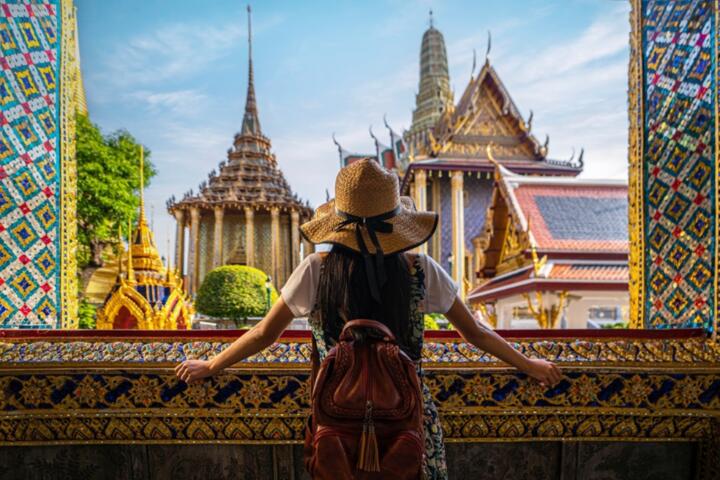
If you are unprepared, yes. Many sites like the Grand Palace in Bangkok rent or sell appropriate clothing. However, these are often overpriced and low quality. Bringing your own linen layers is a better long-term strategy.
Author’s Insight
During my decade of traveling through Southeast Asia, I’ve found that the "spirit of the law" is more important than the "letter." I once forgot a head covering for a mosque in Malaysia, and instead of being turned away, a local woman lent me her spare scarf because she saw I was genuinely trying to be respectful. My advice: always carry a large, high-quality silk or cotton scarf in your daypack. It serves as a scarf, a head cover, or a shoulder wrap, making you "temple-ready" at a moment's notice. This small preparation changes the energy of your entire interaction with the local community.
Summary
Navigating Asian sacred sites requires a blend of preparation and presence. By adhering to the 80% coverage rule, respecting physical hierarchies, and understanding the nuances of spiritual energy, you transform from a mere spectator into a welcome guest. Remember to carry a versatile wrap, use technology like Google Lens for real-time translation, and always prioritize the sanctity of the site over the perfect social media shot. Respect is a universal language; when you speak it fluently, the doors to Asia’s most profound spiritual treasures will open for you.