Beyond the White Cube
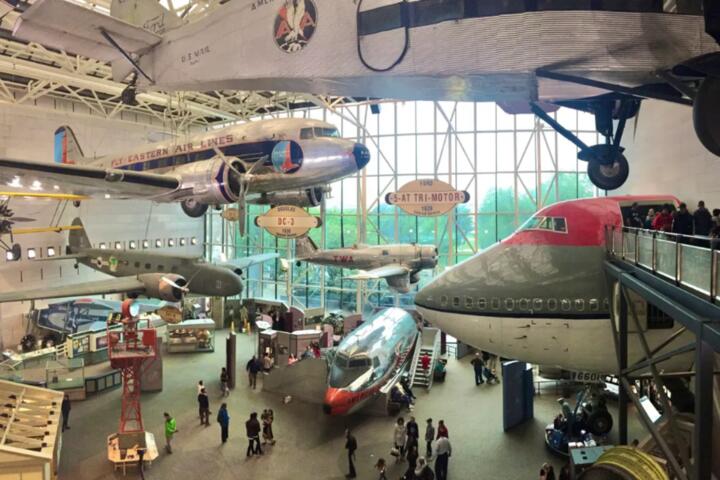
The modern museum landscape is shifting from passive observation to immersive, often unsettling, storytelling. While the British Museum hosts millions, niche sites like the Museum of Broken Relationships in Zagreb or the Sulabh International Museum of Toilets in Delhi offer deep sociological insights that general collections miss. These institutions function as cultural "micro-histories," focusing on the hyper-specific to explain universal human experiences.
Consider the Cancun Underwater Museum of Art (MUSA). It isn't just an art gallery; it's a $1.5 million environmental project consisting of over 500 life-sized sculptures. It serves a dual purpose: diverting tourists from fragile natural reefs and providing a substrate for coral growth. According to UNESCO, cultural tourism accounts for 40% of all global tourism revenue, and "curiosity-driven" visits to unconventional sites are the fastest-growing sub-sector in 2026.
The Common Pitfall
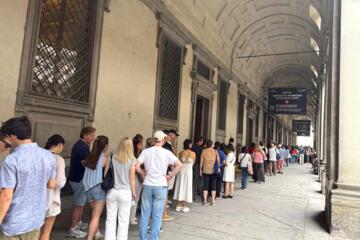
Many travelers suffer from "museum fatigue," a documented psychological phenomenon where the brain stops processing information after 45 minutes of repetitive stimuli. This usually happens because itineraries are packed with "obligatory" stops that lack personal resonance. Relying solely on TripAdvisor "Top 10" lists leads to a homogenized experience where every city starts to look like a blur of marble statues and gold frames.
The consequence is a shallow understanding of local culture. When you visit the Vatican, you see the peak of Renaissance power; when you visit the Museum of Bread Culture in Ulm, Germany, you see the actual history of human survival and labor. Neglecting these smaller sites means missing the authentic pulse of a nation. Real-world data suggests that travelers who incorporate at least one "weird" or niche museum into their 7-day trip report 30% higher satisfaction scores in post-trip surveys.
Strategic Detours
The Subterranean Aesthetic: Deep-Level Exploration
Seeking out underground institutions offers a literal deeper look at urban history. The Paris Sewers Museum (Musée des Égouts) is a prime example. Instead of viewing art, you navigate the actual 2,100-kilometer labyrinth that keeps the city functional. It works because it engages the senses—smell and sound included—making the history of urban planning unforgettable.
To maximize this, use tools like Geographical Information Systems (GIS) maps or local urban exploration forums. The result is a tactile understanding of infrastructure that no textbook can provide. In London, the Churchill War Rooms offer a similar subterranean immersion, preserving the oxygen of 1945. These sites require pre-booking via platforms like Tiqets or Musement, as their physical constraints limit capacity.
Preserving the Intangible: The Psychology of Objects
Some museums don't collect "valuables" in the monetary sense, but rather emotional artifacts. The Museum of Innocence in Istanbul, created by Nobelist Orhan Pamuk, maps a fictional narrative onto real objects. It demonstrates how a simple cigarette butt or an old key can carry the weight of a decade. This works by triggering empathy rather than just admiration.
Practical application involves spending time with the audio guides—often narrated by the founders themselves. Using Google Lens during these visits can help translate the nuanced backstories of obscure items. These institutions transform from rooms of "junk" into profound psychological studies. Visitors often spend twice as long in these small spaces as they do in larger national galleries because the connection is personal.
Technological Oddities: Celebrating Human Error and Obsession
The Museum of Failure (touring globally, with a permanent home in Helsingborg) showcases over 150 failed products, from the Apple Newton to Colgate Lasagna. This is an essential detour for anyone in business or design. It humanizes the process of innovation and removes the stigma of making mistakes. It’s a masterclass in what not to do, backed by corporate history.
When visiting, use a note-taking app like Notion to categorize why these products failed. Was it timing, tech, or branding? This turns a "weird" museum visit into a professional development session. Statistics from innovation hubs show that teams who study failed prototypes are 15% more likely to identify flaws in their own development cycles.
Culinary Curiosities: History Through the Stomach
Food museums are often dismissed as kitsch, but the Disgusting Food Museum in Malmö uses its 80 exhibits to challenge the cultural notion of "disgust." By smelling fermented shark or seeing "maggot cheese," visitors confront their own cultural biases. It’s a lesson in anthropology delivered through the olfactory system.
For a more traditional take, the Frietmuseum in Bruges (the world’s only museum dedicated to potato fries) uses historical documents to prove the dish’s Belgian origins. These visits are best paired with local food tours booked through GetYourGuide. You gain a 360-degree view of a culture: first you see the history, then you taste the reality.
Medical and Macabre: The Science of the Human Form
The Mütter Museum in Philadelphia or the Meguro Parasitological Museum in Tokyo offer a stark look at biology. These aren't just for shock value; they are elite medical history archives. The Mütter houses 20,000 specimens, including slices of Einstein’s brain. This is where "dark tourism" meets rigorous academic research.
These sites are excellent for students and healthcare professionals. They provide a visual timeline of pathology that digital scans cannot replicate. Most of these institutions offer "After Hours" lectures or specialized pathology workshops. Checking the Eventbrite listings for these museums can lead to high-level networking opportunities with curators and researchers.
Impact of Niche Approach
Case Study 1: The Revitalization of Zagreb
Entity: The Museum of Broken Relationships.
Problem: A lack of contemporary tourist draws in Zagreb beyond its Austro-Hungarian architecture.
Action: Two artists started a traveling collection of "remnants of love," eventually finding a permanent home. They invited global crowdsourcing of artifacts.
Result: It won the Kenneth Hudson Award for the most innovative museum in Europe. It now accounts for a significant portion of the city's "independent" tourism revenue, with over 100,000 visitors annually, proving that emotional resonance beats gold frames.
Case Study 2: The Environmental Pivot in Cancun
Entity: MUSA (Museo Subacuático de Arte).
Problem: Over-tourism at the Manchones Reef was killing the natural coral.
Action: Installation of pH-neutral concrete sculptures to create an artificial reef.
Result: 80% of dive traffic was diverted to the museum site. Within three years, the sculptures were covered in biomass, successfully creating a new ecosystem while maintaining tourism revenue of over $20 million annually for the local diving industry.
Discovery Platforms
| Platform | Best For | Key Feature | Reliability for Niche Sites |
|---|---|---|---|
| Atlas Obscura | Hidden gems & oddities | Community-sourced "hidden" locations | High (The industry standard for weird) |
| Culture Trip | Contextual articles | Local expert recommendations | Medium (Better for general vibes) |
| Google Maps (Lists) | Logistics and navigation | Real-time opening hours/crowd data | High (Essential for finding obscure alleys) |
| Roadtrippers | Route planning | Calculates detours based on interests | High (Great for US-based detours) |
Common Mistakes to Avoid
The biggest error is failing to check seasonal or irregular hours. Niche museums often operate on shoestring budgets and may be closed on Mondays, Tuesdays, or for private research. Always verify via their official social media or a direct call rather than relying on third-party aggregators which may have outdated data.
Another mistake is "Visual-Only" engagement. Many of these sites, like the Icelandic Phallological Museum, have deep scientific or sociological context that is lost if you only take photos for Instagram. Buy the guidebook. The $10 investment often reveals the "why" behind the "weird," which is where the true value of the detour lies.
Lastly, don't ignore small-town local history rooms. Often, a tiny museum in a village in the Cotswolds or a "Mom and Pop" collection in the American Midwest holds a single, world-class artifact that has been overlooked by major curators. Approach these with an open mind and talk to the docents—they are usually the owners and possess encyclopedic knowledge.
FAQ
Are unusual museums suitable for children?
It depends on the theme. While the Cup Noodles Museum in Yokohama is a playground for kids, the Mütter Museum or the Museum of Death may be traumatizing. Always check the "visitor info" section for age recommendations.
How do I find these museums in a city I’m already visiting?
Search "Small Museums" or "Private Collections" in Google Maps rather than "Best Museums." Use the "Discovery" feature on Atlas Obscura to see what is within a 10-mile radius of your current location.
Are these sites more expensive than national museums?
Actually, many are cheaper or operate on a donation basis. However, because they are private, they don't always accept common "City Passes." Budget roughly $10-$20 per entry.
Is it safe to visit "dark tourism" sites?
Yes, provided they are established institutions. Museums like Tuol Sleng in Cambodia are somber and respectful. Safety issues only arise when "exploring" abandoned sites that aren't official museums.
Do I need a guide for niche museums?
Rarely. These spaces are usually small enough to navigate solo. However, an audio guide is highly recommended to understand the highly specific context of the items on display.
Author’s Insight
In my decade of traveling to over 50 countries, I’ve found that my memories of the British Museum are a blur of gray stone, but I can tell you exactly what I felt standing in the Vampire Museum (Le Musée des Vampires) in Les Lilas, France. The owner, Jacques Sirgent, told me stories that linked folklore to actual historical plagues. My advice? Don't be afraid of the "weird" label. The most eccentric collections often hold the most honest truths about humanity. If a museum sounds too strange to exist, that is exactly why you should go.
Summary
Breaking away from the standard tourist path requires a shift in mindset: seeing travel as an opportunity for specific discovery rather than general sightseeing. By visiting unusual museums—whether they focus on failed products, underwater art, or the history of sanitation—you engage with the world on a more intellectual and emotional level. To start your journey, pick one city on your upcoming itinerary and find its highest-rated "niche" institution on Atlas Obscura. Make that your priority, and let the rest of the trip revolve around that unique anchor point. The best stories never come from the front of the line at the Eiffel Tower; they come from the strange little door in the alleyway that everyone else walked past.