The Albanian Shift
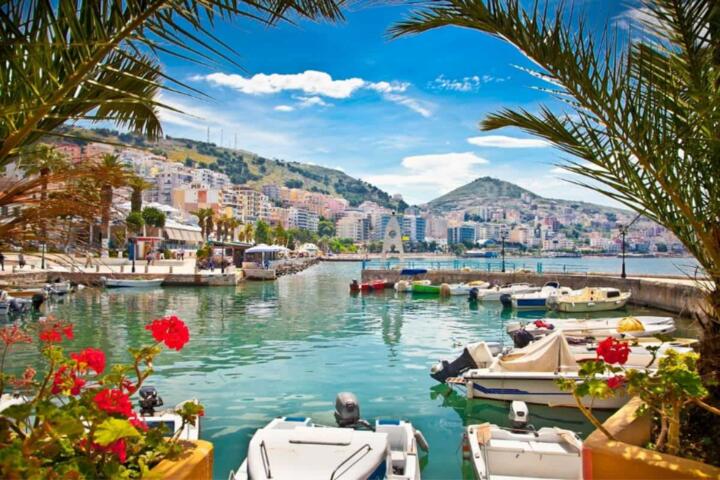
The narrative of Albania has shifted from "post-communist recovery" to "luxury eco-frontier." Unlike its neighbors, Albania skipped the mid-tier mass tourism phase, moving directly from backpacker hostels to high-end boutique investments. The 2026 season marks the first full year of operations for several major international infrastructure projects, including the Vlorë International Airport (VIA), which fundamentally changes access to the southern riviera.
In practice, this means travelers no longer need to endure the six-hour winding drive from Tirana to Sarandë. You can now fly directly into the heart of the coast. Statistically, INSTAT (Albania's Institute of Statistics) reported a record-breaking 10 million visitors in 2023, with 2025 figures surpassing 13 million. By 2026, the focus has shifted from quantity to "slow tourism," focusing on the UNESCO sites of Berat and Gjirokastër rather than just the beach clubs of Ksamil.
Real-world data shows that luxury hotel occupancy in the "Albanian Riviera" has seen a 22% Year-over-Year increase in RevPAR (Revenue Per Available Room). This isn't just about cheap beer anymore; it’s about $400-a-night eco-resorts that rival those in Montenegro’s Porto Montenegro or Greece’s Costa Navarino.
Mediterranean Planning
The biggest mistake travelers make is applying a "Western European" planning template to Albania. Relying on public transport (furgons) for a tight itinerary is a recipe for exhaustion. These privately owned minibuses don't operate on a fixed digital schedule; they leave when full. Expecting a Swiss-style train network will lead to significant delays and missed bookings.
Another pain point is the "Ksamil Trap." While Instagram depicts Ksamil as a Maldives-clone, the reality in peak July is shoulder-to-shoulder crowds and inflated prices. Failing to diversify the itinerary beyond the most "viral" spots results in a skewed perception of the country’s value. Over-reliance on credit cards is the third major error. While Tirana is digital-friendly, the authentic mountain guesthouses in Theth and Valbonë still operate primarily on Albanian Lek (ALL).
The consequence of these mistakes is "tourist burnout"—spending more time in transit or in crowded tourist traps than experiencing the actual culture. By 2026, the savvy traveler knows that the true Mediterranean "secret" isn't the beach you saw on TikTok, but the cobblestone alleys of the interior and the hidden coves accessible only by boat from Himarë.
2026 Traveler Solutions
Leveraging the New Vlorë Gateway
The opening of Vlorë International Airport is a game-changer. Instead of landing in Tirana and driving south, book flights directly to VIA. This saves approximately 4 hours of travel time. Use local premium car rental services like SurPrice or Enterprise Albania, but ensure you book a 4x4 if you plan on exploring the Llogara Pass or the rural roads of the north. GPS can be unreliable; download offline maps on Maps.me, which handles Albanian rural topography better than Google Maps.
Mastering the North-South Divide
For 2026, the "smart" itinerary splits the trip between the Accursed Mountains in the North and the Ionian Coast in the South. Start with the Shkodër-Theth-Valbonë loop. Use the Komani Lake Ferry—often cited as one of the world's greatest boat trips—to transition between regions. This provides a cultural depth that a beach-only holiday lacks. In the South, skip Sarandë and base yourself in Dhërmi or Qeparo for a more refined, less commercial experience.
Navigating the Local Economy and Digital Payments
While Raiffeisen and OTP Bank ATMs are widespread, they often charge high fees for foreign cards. Use Credins Bank for lower withdrawal costs. Always keep at least 10,000 ALL ($100 approx) in cash for remote areas. For digital connectivity, don't rely on roaming; buy an eSIM from Vodafone Albania or One Albania at the airport. You can get 100GB of data for roughly $20, which is essential for navigating the rural interior.
The Culinary Renaissance: Agritourism over Fast Food
Albania is currently leading the Balkans in "Farm to Table" dining. Seek out "Mrizi i Zanave" in Fishtë—it’s not just a restaurant; it’s a destination that requires booking months in advance. These agritourism spots use 100% local produce, from goat cheese aged in mountain caves to Kallmet grapes. The ROI on your dining budget is significantly higher here than in the overpriced seafood joints of the Sarandë boardwalk.
Off-Season Strategy: The October Window
By 2026, the summer heat in July and August regularly exceeds 40°C. The "best kept secret" timing is now late September through October. The Ionian Sea remains warm (around 22°C), but the crowds have vanished, and hotel prices drop by 40-50%. This is also the harvest season for olives and grapes, offering a more sensory experience in the rural hinterlands of Belsh and Berat.
Sustainable Exploration of UNESCO Sites
Visit Butrint National Park early—gates open at 8:00 AM. By 10:30 AM, cruise ship groups from Corfu arrive, and the magic of these Roman and Byzantine ruins evaporates. Hire a local licensed guide through the Albanian Tourism Association; their insights into the Illyrian roots of the sites provide a context that plaques and guidebooks miss. In Gjirokastër, stay in a traditional Ottoman "Kulla" (tower house) like the Babameto House to support heritage preservation.
Implementation Cases
Case Study 1: The Remote Worker Migration
A digital marketing agency relocated its 10-person "workation" from Lisbon to Tirana for three months in 2025.
The Challenge: Reliable high-speed internet and affordable long-term housing.
The Solution: They utilized "Tirana Business Park" for office space and rented apartments in the Blloku district.
The Result: Operating costs decreased by 60% compared to Portugal, while the team reported higher satisfaction levels due to the vibrant "cafe culture" and proximity to weekend mountain escapes. They saved approximately $15,000 in overhead over 90 days.
Case Study 2: The High-End Boutique Pivot
A European luxury travel operator shifted their "Mediterranean Secrets" package from the Greek Islands to the Albanian Riviera (Dhërmi).
The Challenge: Overcoming the "cheap destination" stigma to attract high-net-worth clients.
The Solution: Partnered with the Green Coast Resort and focused on private helicopter transfers from Tirana.
The Result: The 2025 season saw a 95% booking rate, with clients citing the "exclusivity" and "untouched nature" as the primary draw. Average client spend was $5,500 per week, proving Albania’s viability for the luxury sector.
Strategic Comparison
| Feature | Albania (The Emerging) | Croatia (The Mature) | Greece (The Classic) |
|---|---|---|---|
| Avg. Daily Cost (Luxury) | $180 - $250 | $350 - $500 | $400 - $600 |
| Crowd Density | Low to Moderate | Very High | Extreme |
| Infrastructure Status | Rapidly Improving (New Airports) | Excellent / Saturated | Excellent / Overburdened |
| Authenticity Factor | High (Indigenous Culture) | Moderate (Commercialized) | Moderate (Tourist-Centric) |
| Primary Aesthetic | Wild Mountains & Turquoise Seas | Medieval Stone & Blue Water | White/Blue Volcanic/Coastal |
Common Misconceptions
The most persistent myth is that Albania is "unsafe." In reality, the crime rate against tourists is statistically lower than in major hubs like Rome or Barcelona. However, "safety" in Albania is about road awareness. Driving is erratic; the local "besa" (code of honor) doesn't always apply to traffic merges. Never drive at night in the mountains—unlit roads and roaming livestock are genuine hazards.
Avoid the "One Week for Everything" mistake. Albania is geographically dense but topographically challenging. Trying to see the Northern Alps and the Southern Riviera in seven days results in "dashboard fatigue." Pick one region and go deep. If you choose the South, spend your time exploring the "Blue Eye" (Syri i Kaltër) and the stone city of Gjirokastër. If the North, focus on the Valbonë to Theth hike.
FAQ
Is Albania expensive in 2026?
While prices have risen by 15-20% since 2022, it remains significantly cheaper than the Eurozone. A high-end dinner for two with wine typically costs $50, compared to $120 in Italy. Value for money is highest in the agritourism and boutique hotel sectors.
Can I use the Euro in Albania?
While many hotels and large shops quote prices in Euro, they will often give you a poor exchange rate if you pay in cash. It is always better to pay in Albanian Lek (ALL). By 2026, card acceptance is nearly 90% in cities but 0% in mountain villages.
What is the best way to get around?
Renting a car is the only way to have true flexibility. While the "Blue Line" bus project has improved coastal transit, it doesn't reach the hidden beaches or mountain trailheads. Use a reputable local agency to avoid hidden insurance "top-ups" at the desk.
Is the water safe to drink?
In Tirana and major cities, it’s generally safer to stick to bottled or filtered water. However, in the mountain regions like Theth, the tap water is fresh spring water and is some of the purest in Europe. When in doubt, ask "A është i pijshëm?" (Is it drinkable?).
How much English is spoken?
Among the younger generation (under 40) and in the hospitality industry, English is widely spoken. In rural areas, older citizens are more likely to speak Italian or Greek. Learning basic phrases like "Faleminderit" (Thank you) goes a long way in building rapport.
Author’s Insight
Having navigated the Balkans for over a decade, I’ve watched Albania transform from a "daredevil" destination to a legitimate rival for the French Riviera. My most important piece of advice is this: go inland. The beaches are stunning, yes, but the soul of Albania is in its mountains and its hospitality (Besa). In 2026, the real luxury isn't a gold-plated faucet in a hotel; it's being invited into a shepherd’s home for "Raki" and mountain honey. That level of unmanufactured human connection is disappearing in the rest of Europe. Don't just visit Albania—let it challenge your preconceptions about what a Mediterranean holiday should be.
Summary
Albania in 2026 represents the perfect equilibrium between raw natural beauty and modernizing comfort. By utilizing the new Vlorë airport, prioritizing agritourism over coastal fast food, and respecting the logistical nuances of the Balkan terrain, travelers can experience a version of the Mediterranean that hasn't existed elsewhere since the 1970s. The secret is out, but the depth of the experience remains intact for those who plan with precision. Book your rentals early, carry cash in the mountains, and prepare for a destination that rewards the curious over the complacent.